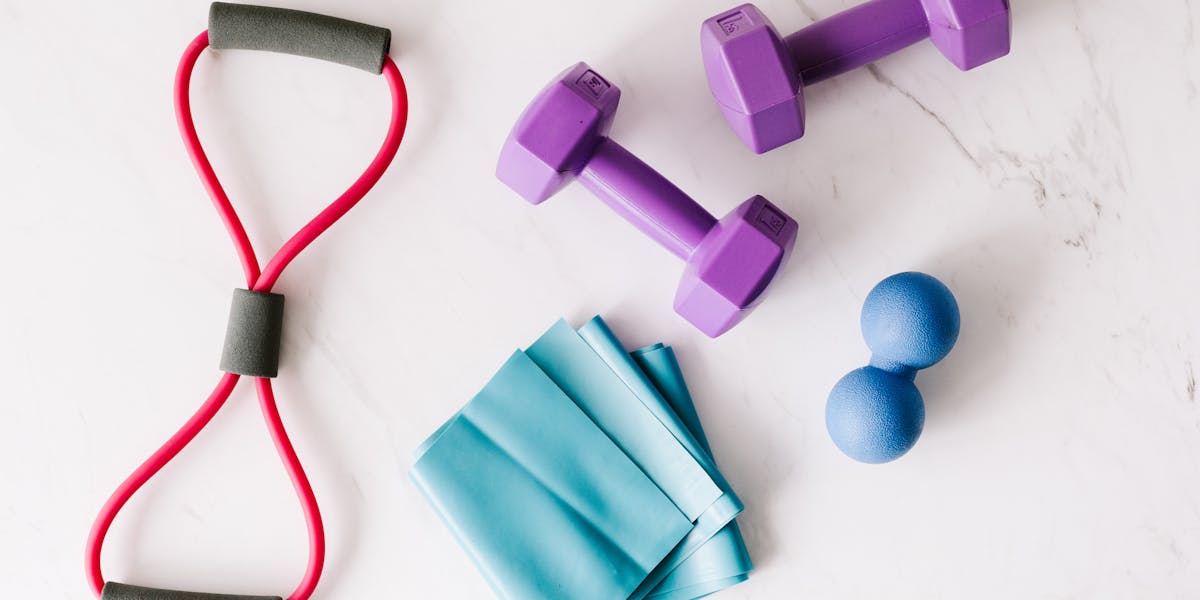
Ascending vs Constant Resistance
Free weights = constant resistance. Bands = ascending (harder as they stretch). Research from the Journal of Strength and Conditioning: bands produce comparable muscle activation for many exercises, but patterns differ. Bands maximize tension at full extension; weights maximize it at the stretched position.
Real Answer
Bands don't replace heavy compound lifts. They're superior for rehab, travel, accessory work, and combining with barbells for accommodating resistance.

ROGUE Monster Bands Set
$80/set Check Price on Amazon
41" loop, 5 resistance levels (15-200 lbs combined). Thick latex, color-coded. Best for barbell accommodating resistance.
Bodylastics Stackable Tube Set
Clip-on handles, door anchor, ankle straps, 5 tubes (96 lbs combined). Best for home workouts replacing cables.
Fit Simplify Loop Bands
$12/5-pack Check Price on Amazon
Mini loops for glute activation, PT exercises, warm-ups. Every gym bag should have these.
WODFitters Pull-Up Assist Bands
$13-30 each Check Price on Amazon
41" loops, individual resistance levels. Best for pull-up progressions and stretching.
TheraBand CLX Resistance Band
Pre-cut loops, latex-free, used by physical therapists. Best for rehabilitation.
Sources
- Lopes et al. "Elastic Resistance vs Conventional Resistance." JSCR, 2019.
- Bergquist et al. "Muscle Activation With Elastic Bands." SJMSS, 2018.