Fast answer for "golf ball compression"
Compression affects feel and energy transfer, but modern ball fitting is not a one-number chart. Match compression with cover, spin, launch, speed, and short-game needs.
| Reader | First Check | Why It Fits | Buy Zone |
|---|---|---|---|
| Slow/moderate speed | Soft or mid-compression trial set | Softer feel can help comfort and launch, but short-game spin still depends on cover and construction. | Fit by results |
| Higher speed | Firmer tour-style or fitted urethane ball | Higher speed players can over-compress very soft balls and lose control or speed. | Test on launch monitor |
| Spin-sensitive player | Low-spin model like AVX-style profile | Titleist positions AVX for lower long-game spin, lower flight, and softer feel than Pro V1. | Compare with Pro V1 |
| Tournament player | USGA conforming ball check | The conforming list is updated monthly and may be a local rule for high-level events. | Check exact markings |
| Most amateurs | Ball fitting before bulk buying | Bridgestone and other fitting systems combine swing speed, ball flight, and scoring priorities. | Buy small trial packs |
If you searched "compression of golf balls," use it as a fitting clue
The page now frames compression around real selection: swing speed, desired flight, urethane vs ionomer cover, spin window, USGA conformance, and budget.
Golf ball compression source path
Use compression alongside current conforming status, fitting, cover material, spin, launch, and short-game control.
Golf ball compression decision matrix
Use this before buying three dozen based only on a chart.
The Most Under-Researched Purchase in Golf
The average golfer spends 3 weeks researching a driver and 3 seconds choosing a golf ball. According to a 2023 MyGolfSpy consumer survey, 68% of recreational golfers play whatever ball they find on sale or receive as a gift. Meanwhile, a properly matched golf ball can produce a measurable 5-8 yard distance gain and noticeably better feel around the greens — without changing anything else in your bag.
Golf ball compression is the spec that matters most for matching a ball to your swing. Here's what it means in plain language.
What Is Compression, Actually?
Compression measures how much a golf ball deforms (squishes) at impact. It's rated on a scale roughly from 30 to 110, though manufacturers aren't required to follow a universal standard.
- Low compression (30-60): Ball deforms more easily → requires less swing speed to compress fully → longer for slower swingers
- Mid compression (60-90): The sweet spot for most amateur golfers
- High compression (90-110): Resists deformation → needs fast swing speed to compress fully → more control for fast swingers
The physics are straightforward: a ball must be fully compressed at impact to transfer maximum energy. Swing a high-compression ball slowly and you're leaving distance on the table — the ball doesn't compress enough to "spring" properly off the face. Dean Snell (former Titleist VP of ball R&D, now founder of Snell Golf) explains it as "trying to compress a rock versus a tennis ball — you need to match the ball to the force you can generate."
The Three Compression Tiers
Low Compression (Under 65): For Swing Speeds Below 85 mph
These balls compress easily, maximizing distance for moderate swing speeds. They tend to feel softer on the putter face and produce less spin off the driver (which reduces slices for many amateurs).
Best for: Seniors, many women golfers, beginners, anyone with driver swing speed under 85 mph.
Mid Compression (65-90): For Most Amateur Golfers
This is where the majority of golfers should be playing. Mid-compression balls offer a balance of distance, feel, and greenside spin. If you swing your driver between 85-105 mph (which covers roughly 70% of male golfers per Arccos data), this is your tier.
High Compression (90+): For Swing Speeds Above 105 mph
Tour-level balls designed for maximum control with fast swing speeds. These balls feel firm, spin more on approach shots (giving better stopping power), and require significant swing speed to compress properly. If you swing under 100 mph, these balls are costing you distance.
The Cover Material Factor: Why It Matters as Much as Compression
Compression is only half the story. Cover material determines how the ball performs around the green:
| Cover Type | Feel | Spin (Short Game) | Durability | Price Tier |
|---|---|---|---|---|
| Surlyn (ionomer) | Firm/clicky | Low | Very durable | $20-30/doz |
| Urethane | Soft/responsive | High | Scuffs easier | $35-55/doz |
Urethane-covered balls grip the clubface on chip and pitch shots, creating backspin that stops the ball faster on the green. Surlyn balls tend to release and roll more. For golfers who can control their short game, urethane is a genuine performance advantage. For beginners who primarily need distance and don't spin wedge shots intentionally, Surlyn is fine.
The Temperature Variable Nobody Mentions
Golf ball compression changes with temperature. In cold weather (below 50°F), the ball's core stiffens, effectively increasing the compression rating by 5-15 points. A ball rated 90 compression at 70°F might play like 100+ compression at 40°F.
Practical takeaway: If you play in cold weather, drop down one compression tier. Your summer mid-compression ball should be swapped for a low-compression option in early spring and late fall. Per Bridgestone Golf's cold-weather testing data, switching to a lower-compression ball in sub-50°F conditions recovers 5-10 yards of distance lost to temperature.
Common Mistakes
The Smart Ball-Buying Strategy
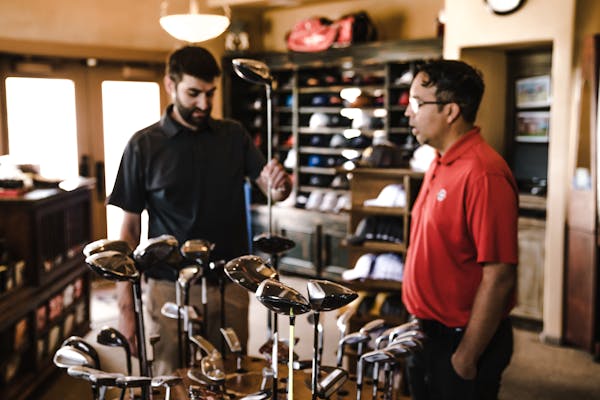
- Know your driver swing speed — Use a cheap radar, range estimate, or get checked at a store (most do free ball fittings). See our shaft flex guide for speed estimation methods.
- Buy a sleeve of 3 different compressions and play 3 rounds. You'll feel the difference.
- Consider buying direct — brands like Snell, Vice, and Sugar Golf sell direct-to-consumer, cutting $10-15 off per dozen versus retail brands.
- Buy in bulk — most brands offer buy-3-get-1-free or similar deals on 3+ dozen orders.