R-Value: The Number That Actually Matters
R-value measures thermal resistance — how well a sleeping pad insulates you from the cold ground. It's the single most important spec on any sleeping pad, yet it's often printed in small text while "thickness" and "weight" dominate marketing.
Critical insight: Cold ground draws heat from your body through conduction far faster than cold air. A R-2 pad in 30°F weather will make a 20°F-rated sleeping bag feel like it's not doing its job. Your sleeping bag keeps you warm from above; your pad keeps you warm from below.
ASTM F3340 Standard (2019)
Before 2019, brands used different testing methods — making R-value comparisons meaningless between brands. The ASTM F3340 standard mandates a single testing method. Any pad made after 2020 with an R-value rating should be tested to this standard. Older pads or pads without ASTM certification have unreliable ratings.
R-Value Guide by Temperature
| Condition | Temperature Range | Minimum R-Value |
|---|---|---|
| Summer/warm camping | Above 40°F nights | R-2 |
| 3-Season backpacking | 20°F–40°F nights | R-3 to R-4 |
| Early/late season | 10°F–20°F nights | R-4 to R-5 |
| Winter camping | Below 10°F | R-5+ |
Key fact: R-values are additive. Combining a foam pad (R-2.0) under an inflatable pad (R-3.5) gives you R-5.5. Many winter campers use this strategy.
Foam Pads: Bulletproof and Predictable
Closed-cell foam pads (CCF) are the original backpacking sleep surface. They cannot puncture, require no inflation, double as a sit pad, and are immune to cold temperatures affecting their insulation (unlike some inflatables).
Pros
- Indestructible: Cannot puncture, no moving parts, nothing to fail
- Instantly ready: No inflation needed — just unroll and lie down
- Cold-weather stable: R-value doesn't change in cold temperatures
- Multi-use: Excellent sit pad, emergency splint, pack padding
- Cheap: $30–60
Cons
- Bulky: Must be strapped outside pack — can't compress
- Less comfortable: Thin (0.6–0.75 in.) with no cushioning for side sleepers
- Moderate warmth: Best models reach R-2.5 to R-4.5
Best foam pad: Therm-a-Rest Z Lite SOL — 14 oz, R-2.0, $55. The reference standard CCF pad used by PCT and AT thru-hikers as a standalone or under an inflatable.
Inflatable Pads: Warm, Comfortable, Compressible
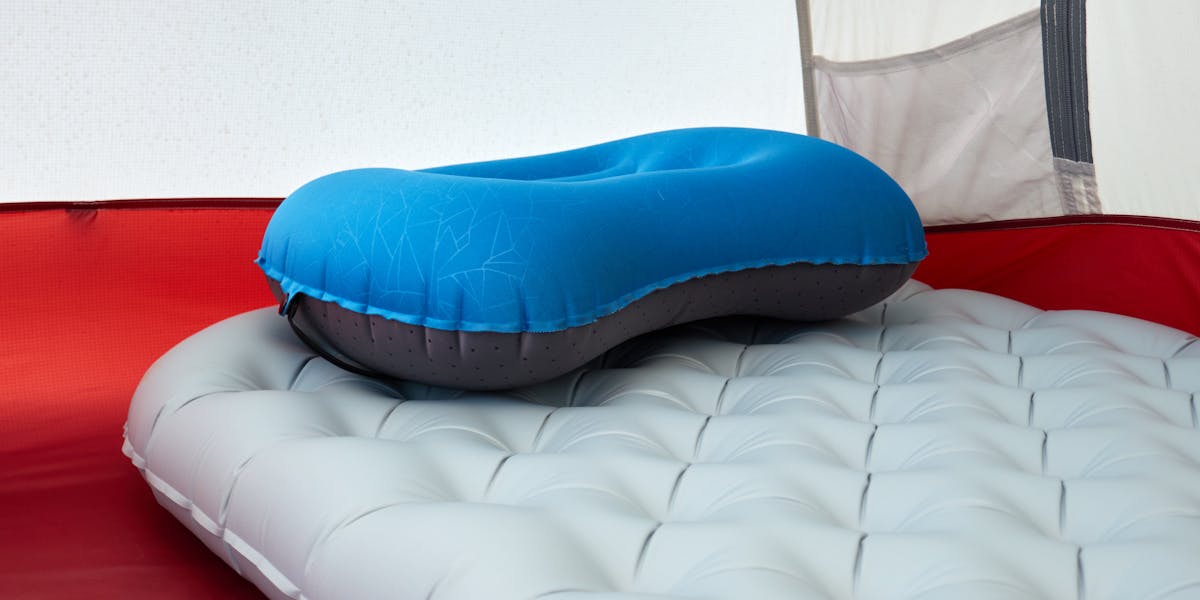
Inflatable pads trap air in internal baffles, achieving high R-values at relatively low weight. They pack to the size of a Nalgene bottle — a massive advantage over foam. The downside: puncture risk, though this is less common than feared with modern fabrics.
Air Pads vs Self-Inflating
- Air pads: You inflate entirely by mouth or pump. Lightest and thinnest packed. Examples: Therm-a-Rest NeoAir series, NEMO Tensor, Sea to Summit Ether Light XT.
- Self-inflating: Open-cell foam absorbs air when valve opens — you just top it off. Heavier and larger packed than air pads but more comfortable and durable. Examples: Therm-a-Rest Trail Scout, REI Flash.
Inflatable Pad Pros
- Compressibility: Packs to 4"x12" or smaller
- High R-value: Premium pads reach R-4 to R-7 at low weight
- Comfort: 2–4" thickness is comfortable for side and stomach sleepers
- Weight: Top models: 9–16 oz
Inflatable Pad Cons
- Puncture risk: Manageable but real. Always carry a patch kit.
- Setup time: 5–10 breaths to inflate; deflate and roll for packing
- Crinkle noise: Some pads are loud when you move — disruptive to sleep partners
- Cost: Quality pads run $130–250
Hybrid Pads: Best of Both Worlds
Hybrid pads combine a foam core with an inflatable layer. The foam provides baseline insulation if punctured, while the inflatable layer adds comfort and warmth. The Therm-a-Rest NeoAir Topo is the best example.
- Weight: 16–24 oz — heavier than pure inflatables
- R-value: R-2.5 to R-4
- Best for: Campers worried about puncture risk who want inflatable comfort
Type Comparison
| Type | Weight (Reg.) | R-Value | Packed Size | Durability | Price |
|---|---|---|---|---|---|
| Foam (CCF) | 14–18 oz | 2.0–4.5 | Bulky (ext.) | ★★★★★ | $30–80 |
| Inflatable Air Pad | 9–16 oz | 2.5–7.0 | Small (int.) | ★★★☆☆ | $120–280 |
| Self-Inflating | 18–32 oz | 2.0–4.5 | Medium | ★★★★☆ | $80–200 |
| Hybrid | 16–24 oz | 2.5–4.0 | Small–Med | ★★★★☆ | $100–220 |
Top Picks
Sources & Further Reading
Reviewed May 29, 2026. Source notes emphasize safety, food storage, navigation, fit, standards, and backcountry-use references behind this guide's recommendations.
- ASTM International. Sleeping pad R-value standard announcement.
- ASTM F3340-18. Standard test method for sleeping pad thermal resistance.
- Therm-a-Rest. Sleeping pad R-value explanation.
- Sea to Summit. R-value testing support article.
- ASTM F3340 sleeping pad R-value standard
- National Park Service - Ten Essentials
- National Park Service - camping