Fast answer for "pickleball court construction"
The painted court is 20 by 44 feet, but the project is bigger than the lines. USA Pickleball cites 30 by 60 feet as a minimum recommended total playing surface, and pro builds need more room.
| Reader | First Check | Why It Fits | Buy Zone |
|---|---|---|---|
| Backyard court | Confirm 30x60 ft usable area | The lines fit in less space, but run-off area affects safety and playability. | Measure first |
| DIY surface | Base, drainage, coating | Cracks, slope, and drainage matter more than the paint kit. | Prep budget |
| Tile court | Manufacturer system check | Modular tile can solve drainage/speed needs only when installed to spec. | Ask bounce details |
| Permanent net | Sleeves/posts before surfacing | Post placement and sleeves are harder to fix after final surface coating. | Plan early |
| Lighting | Sports-light design | Glare, spill, pole location, and local code are contractor-level decisions. | Get quotes |
If you searched "pickleball construction," price the site work before the net
The page now puts dimensions, base prep, drainage, surfacing, and lighting ahead of shopping-list product links.
Pickleball court construction retailer option
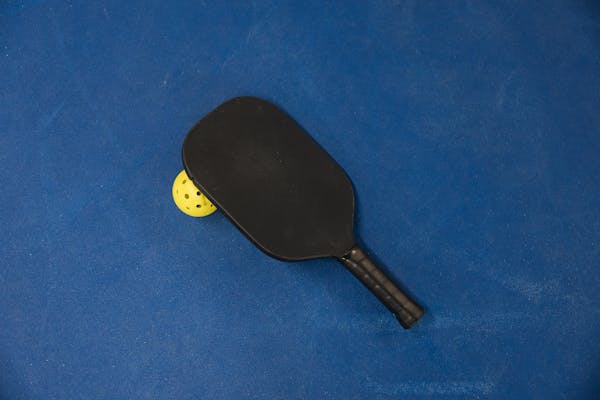
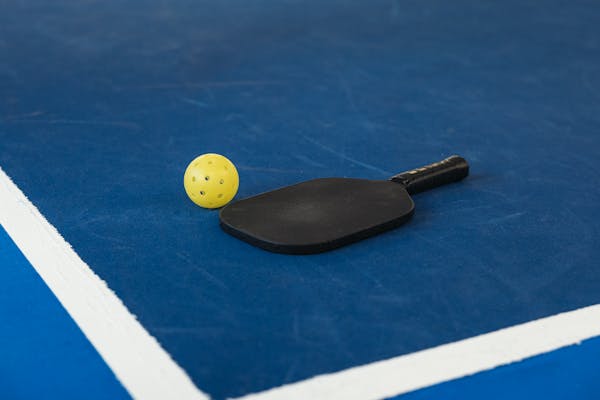
Court construction should start with official dimensions, total play area, surface, drainage, and contractor scope.
Pickleball court construction decision matrix
Use this before requesting quotes.
Official Pickleball Court Dimensions
A standard pickleball court is 20 feet wide × 44 feet long — identical in footprint to a doubles badminton court. The lines, zones, and net height are governed by USA Pickleball. Here are the exact measurements you need for construction:
| Element | Measurement | Notes |
|---|---|---|
| Court width | 20 ft (6.1 m) | Sideline to sideline |
| Court length | 44 ft (13.4 m) | Baseline to baseline |
| Kitchen (NVZ) depth | 7 ft (2.13 m) | Each side from net |
| Service box width | 10 ft (3.05 m) | Each side of centerline |
| Net height — sideline | 36 in (91.4 cm) | At net posts |
| Net height — center | 34 in (86.4 cm) | Sag at centerline |
| Net post spacing | 22 ft (6.7 m) | Outside the sidelines |
| Line width | 2 in (5 cm) | All boundary lines |
Total Space Requirements
The playing surface is 20×44 ft, but you need out-of-bounds buffer space around the court for safe play. USA Pickleball recommends different minimums depending on use:
| Use Case | Total Space Required | Buffer |
|---|---|---|
| Minimum recreational | 30 ft × 60 ft | 5 ft each side, 8 ft each end |
| Preferred recreational | 34 ft × 64 ft | 7 ft each side, 10 ft each end |
| Tournament / competitive | 40 ft × 74 ft | 10 ft each side, 15 ft each end |
Surface Types Compared
Surface choice is the biggest variable in both cost and long-term quality. Each material has different construction requirements, cost profiles, and play characteristics:
Post-Tensioned Concrete — Gold Standard
Post-tensioned concrete uses internal steel cables tensioned after the concrete is poured to resist cracking from ground movement and temperature changes. It's the surface used at professional facilities and is the most durable option available — properly installed post-tensioned concrete lasts 25–40 years with minimal maintenance.
Cost: $20,000–$35,000 for the slab alone (court size). Requires a licensed concrete contractor with post-tensioning experience. Not DIY-feasible.
Play quality: Excellent. Consistent, true bounce. Acrylic coating applied over concrete provides the right ball-surface friction for pickleball.
Standard Concrete
4–6 inch reinforced concrete with rebar or wire mesh is the most common surface for backyard and community courts. Less crack-resistant than post-tensioned but significantly cheaper and still excellent for recreational play.
Cost: $8,000–$18,000 for slab. Professional finishing with acrylic coating adds $3,000–$6,000.
Play quality: Very good. Requires proper slope (1% grade minimum) for drainage or water pools on the surface.
Lifespan: 15–25 years before resurfacing is needed. Crack repair is routine maintenance.
Asphalt
Asphalt is cheaper upfront than concrete but produces a less consistent bounce and cracks significantly faster — especially in climates with freeze-thaw cycles. Not recommended as a first choice but viable in mild climates where cost is the primary constraint.
Cost: $5,000–$12,000 for the surface. Acrylic coating required ($2,000–$4,000).
Play quality: Good when new. Deteriorates faster than concrete. Softer surface is slightly easier on joints.
Lifespan: 8–15 years before major resurfacing. Annual crack filling expected in cold climates.
Modular Tiles (VersaCourt, Sport Court) — Best DIY Option
Interlocking polypropylene tiles that install over any flat, level surface — existing concrete, asphalt, pavers, or compacted gravel. No concrete work required. The fastest and most accessible DIY option for backyard courts.
Cost: $4,000–$9,000 for a full court (materials only). DIY installation: 1–2 days for two people.
Play quality: Good. Slightly cushioned feel vs concrete. Consistent bounce. Some players prefer the give underfoot for reduced joint impact.
Lifespan: 10–15 years. Individual tiles can be replaced if damaged.
| Surface | DIY? | Material Cost | Installed Cost | Lifespan | Play Quality |
|---|---|---|---|---|---|
| Post-tensioned concrete | No | — | $23K–$41K | 25–40 yrs | ⭐⭐⭐⭐⭐ |
| Standard concrete | Experienced only | $8K–$18K | $11K–$24K | 15–25 yrs | ⭐⭐⭐⭐⭐ |
| Asphalt | No | $5K–$12K | $7K–$16K | 8–15 yrs | ⭐⭐⭐⭐ |
| Modular tiles | Yes ✅ | $4K–$9K | $4K–$9K | 10–15 yrs | ⭐⭐⭐⭐ |
Full Cost Breakdown by Build Type
Here's a realistic cost breakdown for three common build scenarios — not just the surface, but everything needed to play:
| Component | Budget DIY (Tiles) | Mid-Range Concrete | Full Build |
|---|---|---|---|
| Surface / slab | $4,500 | $14,000 | $28,000 |
| Acrylic coating + lines | Included | $4,000 | $5,000 |
| Net + posts | $250 | $600 | $1,200 |
| Fencing (optional) | — | $3,000 | $8,000 |
| Lighting (optional) | — | — | $6,000 |
| Grading / site prep | $500 | $2,000 | $4,000 |
| Permits | $0–$500 | $500–$1,500 | $1,500–$3,000 |
| Total estimate | ~$5,250 | ~$24,100 | ~$53,200 |
DIY Step-by-Step: Modular Tile Court
A modular tile court is the only realistic full DIY option for most homeowners. Here's the complete process:
Choose a flat area with at least 30×60 ft clear of trees, overhead lines, and structures. Check with your HOA and local building department. Mark the perimeter with stakes and string. Measure diagonals — they must be equal for a true rectangle (Pythagorean theorem: diagonal = √(30² + 60²) = 67.1 ft).
The surface under your tiles must be flat (±¼ inch over 10 ft), firm, and have adequate drainage. Options: existing concrete or asphalt (ideal), compacted gravel base (6 inches of crushed stone, tamped), or pavers. Soft ground, grass, or loose gravel will cause tiles to shift and create tripping hazards.
A 20×44 ft court requires 880 square feet of tiles. Order 10% extra for cuts and replacements (~968 sq ft total). VersaCourt and Sport Court are the most widely used brands. Both ship direct and include installation guides. Cost: $4–$7 per sq ft depending on tile thickness and brand.
Start from the center and work outward. Snap tiles together following the manufacturer's grid. Cut edge tiles with a circular saw or jigsaw. Two people can complete a full court in 6–10 hours. Leave ¼ inch expansion gap at all edges for temperature movement.
Most modular tile packages include court line tape in the correct colors (white boundary lines, blue/green kitchen zone). Alternatively, use 2-inch outdoor line painting tape. Follow the official line dimensions from the table above. The centerline runs the full length; kitchen line is 7 ft from each side of net.
Anchor net posts into the sub-surface (concrete anchors for permanent posts, weighted portable bases for modular courts). The net must be 36 inches at the posts and sag to 34 inches at center. Measure and adjust the center strap tension until you hit 34 inches.
Best Portable Net Systems for DIY Courts
For modular tile courts where you can't anchor posts into concrete, a weighted portable net system is the standard solution. It sits on the tile surface without drilling and is removable if needed.
When to Hire a Professional
DIY makes sense for modular tiles. For concrete or asphalt, hire a licensed contractor. Things that require professionals:
- Concrete work — Mixing ratios, rebar placement, curing, and drainage slope require experience. Bad concrete cracks within 2–3 years.
- Post-tensioning — Requires specialized equipment and a certified crew. Never DIY.
- Grading and drainage — Improper slope causes water pooling that accelerates surface deterioration and creates hazardous playing conditions.
- Electrical for lighting — Requires a licensed electrician. Outdoor circuits need GFCI protection and weatherproof fixtures.
Net and Post Systems
Net system choice depends on whether your court is permanent or portable:
| Type | Best For | Installation | Cost |
|---|---|---|---|
| Portable weighted frame | Modular tile / temporary courts | No tools, 5 min setup | $150–$300 |
| Ground sleeve posts | Concrete courts, removable | Concrete sleeve anchors | $300–$600 |
| Direct-embed posts | Permanent concrete courts | Set in concrete pour | $400–$800 |
| Commercial post system | Multi-court facilities | Professional install | $800–$1,500 |
Permits, Zoning, and HOA
This is the step most people skip and later regret. Requirements vary by municipality, but general rules:
- Concrete slabs >200 sq ft — Permit required in most jurisdictions. A pickleball court slab is 880 sq ft.
- Fencing over 6 ft — Permit required almost universally.
- Lighting / electrical — Permit required, must be licensed electrician.
- Modular tiles on existing pavement — Usually no permit required. Verify with your municipality.
- HOA — Many HOAs restrict sports court construction, fence height, and surface materials. Get written approval before breaking ground or buying materials.
Lighting for Evening Play
If you want to play after dark, plan electrical before the concrete pour — conduit is much easier to install before the slab. Standard court lighting uses 4–6 LED pole lights positioned outside the court boundary at a height of 18–20 ft. Expect $4,000–$8,000 installed for a properly lit single court.
Court Maintenance
Keeping your court in good condition is straightforward but requires regular attention:
Weekly: Sweep debris (leaves, dirt) off the surface — grit accelerates wear on both the surface coating and the ball. Inspect tiles for shifting or loose connections on modular courts.
Annually: Inspect concrete for cracks — fill hairline cracks with polyurethane caulk immediately before water infiltration causes them to widen. Check net tension and post anchors. Inspect line tape or painted lines.
Every 5–8 years: Resurfacing with fresh acrylic coating restores ball friction, visibility, and UV protection on concrete and asphalt courts. Cost: $2,000–$5,000 for a single court professionally done.
Modular tiles: Power wash annually. Replace individual cracked tiles as needed — most manufacturers sell individual tiles for $3–$6 each. No resurfacing required.
Sources & Further Reading
Reviewed June 18, 2026. Source notes emphasize official USA Pickleball court dimensions and rules, approved-ball and equipment context, court surface classification, net setup, drainage, and commercial facility planning checks.