Pitching Machine Types Explained
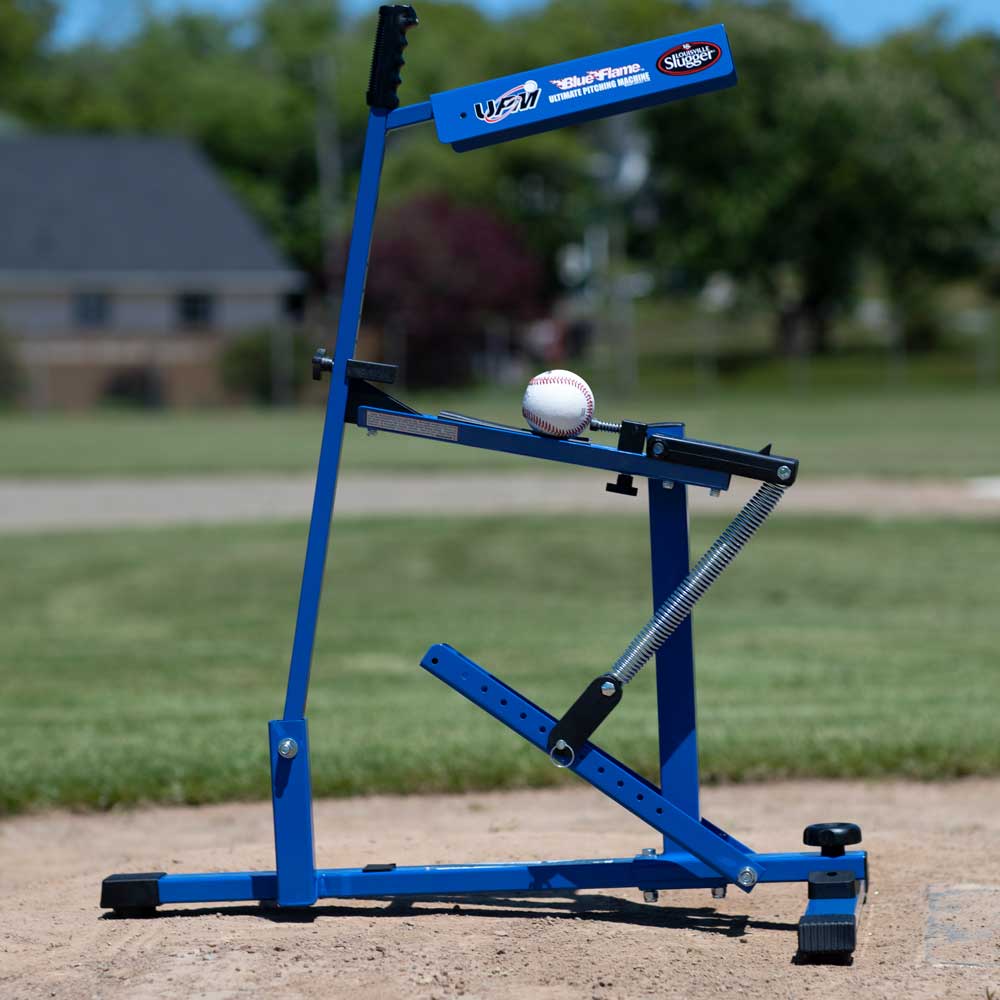
Arm-Style Machines (e.g., JUGS Lite-Flite, Louisville Slugger Blue Flame)
A mechanical arm swings forward and releases the ball, mimicking a pitcher's motion. The biggest advantage: hitters can see the "arm" come forward, which develops timing better than wheel machines where the ball appears suddenly.
- Speed range: 18-70 mph (varies by model)
- Pitch types: Mostly fastballs; some models do curves
- Accuracy: Good — consistent release point
- Best for: Youth development, timing training
- Price: $150-$1,500
Wheel Machines (Single and Dual)
One or two spinning wheels grip and launch the ball. Single-wheel machines throw fastballs and changeups. Dual-wheel machines can throw breaking balls by spinning wheels at different speeds.
Single Wheel
- Speed range: 15-75 mph
- Pitch types: Fastballs, changeups
- Price: $400-$1,200
Dual Wheel (e.g., JUGS Curveball, Hack Attack)
- Speed range: 25-100+ mph
- Pitch types: Fastballs, curves, sliders, changeups, cutters
- Price: $1,200-$4,000+
Compressed Air (e.g., Zooka ZS740)
Uses compressed air to launch balls. Extremely portable, battery-powered, near-silent operation. No spinning wheels or moving parts to maintain.
- Speed range: 10-70 mph
- Pitch types: Mostly straight; limited breaking ball ability
- Price: $600-$1,200
- Best for: Portability, backyard use, quiet neighborhoods
Feature Comparison
| Feature | Arm-Style | Single Wheel | Dual Wheel | Compressed Air |
|---|---|---|---|---|
| Max Speed | ~70 mph | ~75 mph | 100+ mph | ~70 mph |
| Breaking Balls | Limited | No | Yes ✓ | Limited |
| Visible Delivery | Yes ✓ | No | No | No |
| Portability | Moderate | Low | Low | Excellent |
| Noise Level | Moderate | Loud | Loud | Quiet |
| Maintenance | Low | Moderate | Moderate | Low |
| Price Range | $150-$1,500 | $400-$1,200 | $1,200-$4,000 | $600-$1,200 |
Speed Ranges by Player Level
| Level | Age | Recommended Speed Range |
|---|---|---|
| T-Ball/Coach Pitch | 5-7 | 25-35 mph |
| Kid Pitch Minors | 8-10 | 35-50 mph |
| Majors/Travel | 11-12 | 45-65 mph |
| Middle School | 13-14 | 55-75 mph |
| High School | 14-18 | 65-85 mph |
| College/Adult | 18+ | 75-95+ mph |
Buy a machine that covers your current speed PLUS 15-20 mph above for growth. A player at 50 mph should get a machine that reaches 70 mph minimum.
Setup and Space Requirements
- Minimum distance: 30-60 feet from machine to batter (varies by speed)
- Backstop/net: Essential. Budget $100-$300 for a quality batting cage net
- Power: Most wheel machines need 110V outlet. Compressed air and some arm machines are battery/manual
- Surface: Level ground. Grass or artificial turf works. Concrete can damage balls
Top Recommendations
Best for Youth (Under $500)
Best All-Around ($500-$1,500)
Best for Serious Training ($1,500+)
Pair your machine with quality broken-in gloves and properly weighted bats.
Sources & Further Reading
- JUGS Sports. "Pitching Machine Selection Guide." jugssports.com, 2025.
- Sports Attack. "Hack Attack Technology." sportsattack.com, 2025.
- Little League International. "Equipment Specifications." littleleague.org, 2025.
- Baseball America. "Training Equipment Guide 2025."
- Perfect Game. "Youth Player Development: BP Best Practices." 2024.