
Why Ski Type Matters More Than Brand
A powder ski on hardpack ice is terrifying. A carving ski in 12 inches of fresh snow is exhausting. Waist width is the single most important spec that determines what a ski does best — and it's the spec most beginners ignore while obsessing over brand names.
Per Blister Gear Review's database of 500+ ski tests, waist width correlates more strongly with terrain performance than any other variable. Here's the breakdown.
Carving Skis (Waist: 65–80mm)
Designed for groomed runs and hardpack. Narrow waist enables quick edge-to-edge transitions. Short turn radius (12–16m) makes them agile on packed snow. They feel like a sports car on groomers but flounder in anything deeper than 3 inches of fresh.
Best for: Resort skiers who primarily ski groomed runs, racers, icy East Coast conditions.
All-Mountain Skis (Waist: 85–100mm)
The "one ski quiver" for most recreational skiers. Wide enough to handle moderate powder, narrow enough to carve on groomers. If you can only own one pair of skis, this is the category. Per SKI Magazine's 2025 Gear Guide, all-mountain skis in the 88–95mm range outsell all other categories combined.
Best for: The majority of recreational skiers who ski varied terrain.
Powder Skis (Waist: 105–130mm)
Built to float in deep snow. Wide platforms distribute your weight over more surface area, preventing you from sinking. Rocker profiles in tip and tail help the ski plane on top of snow rather than diving underneath it.
Best for: Backcountry, deep powder days, Western resorts with consistent snowfall.
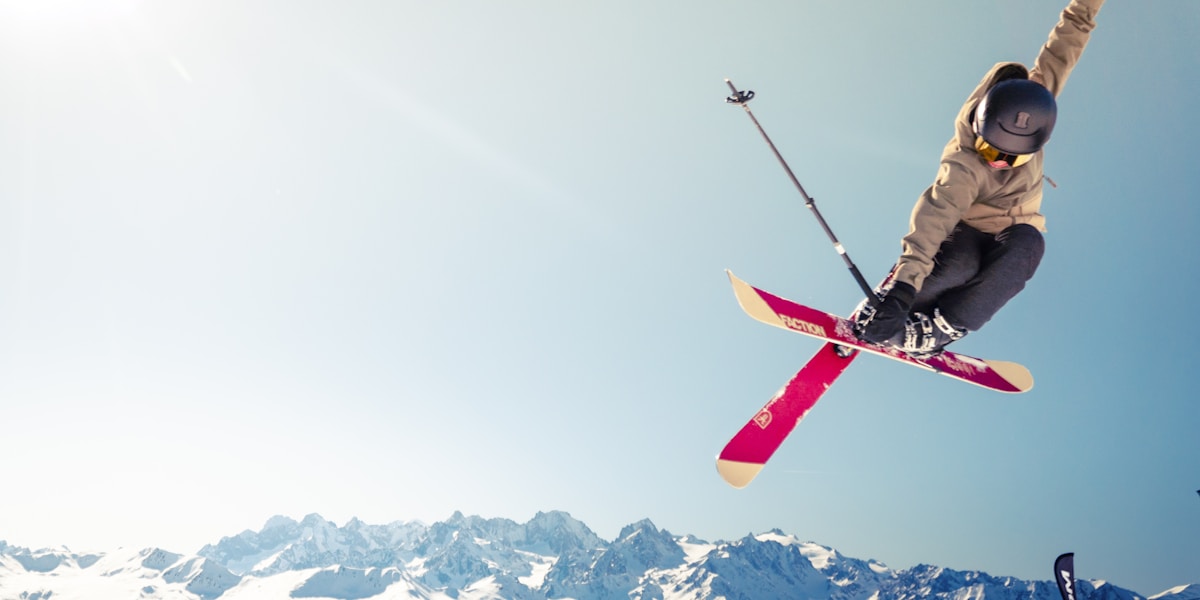
Park/Freestyle Skis (Waist: 84–96mm)
Twin-tip design (upturned tail) for riding switch (backwards). Softer flex for buttering and pressing. Centered mounting point for balanced spins. Durable topsheets and edges for rail and box features.
Best for: Terrain park riders, freestyle skiers, anyone who wants to ski switch.
Touring/Backcountry Skis (Waist: 85–110mm)
Lightweight construction for uphill travel. Compatible with touring bindings (pin or hybrid). Typically 20–40% lighter than their resort equivalents. Wider models (100+mm) for deep backcountry powder; narrower models (85–95mm) for high-speed touring.
How to Choose: The Decision Framework
| Where You Ski Most | Conditions | Recommended Type | Waist Width |
|---|---|---|---|
| East Coast resorts | Hardpack, ice, groomed | Carving or narrow All-Mountain | 70–88mm |
| Western resorts (mixed) | Groomers + some powder | All-Mountain | 88–98mm |
| Western resorts (powder focus) | Powder + off-piste | Wide All-Mountain or Powder | 98–115mm |
| Terrain park | Features, jumps, rails | Park/Freestyle | 84–96mm |
| Backcountry | Touring + powder | Touring | 90–110mm |
If you're buying your first "real" ski: Get an all-mountain ski in the 88–95mm range. It won't be the best at anything, but it'll be competent at everything. Save the specialized skis for when you know exactly what you want.
Budget Recommendations
Sources & Further Reading
- Blister Gear Review. "Ski Buying Guide 2025." blisterreview.com
- SKI Magazine. "2025 Gear Guide: Best All-Mountain Skis." skimag.com
- Powder Magazine. "Ski Test 2025." powdermag.com
- Evo. "How to Choose Skis." evo.com/guides
- Dein, J. & Parker, R. "The Blister Recommended Guide." blisterreview.com/recommended


