Fast answer: CPSC first, fit second, ratings third
For a bike helmet, verify the required safety label for your market, make sure the helmet sits level and stable on your actual head, then use Virginia Tech bicycle helmet ratings as a comparative lab input. Mips-style systems and similar rotational-impact designs are useful features, but no single feature or rating guarantees an injury outcome.
- Compliance: In the US, look for CPSC bicycle helmet compliance and a clear fit/positioning label.
- Fit: The helmet should sit level, cover the forehead, and avoid rocking after the retention system is snug.
- Comparison: Use current independent ratings to compare tested models after compliance and fit are handled.
Not All Helmets Protect Equally
For US buyers, start by verifying CPSC bicycle helmet compliance. Baseline standards focus on defined lab impacts and retention requirements, while real crashes can also include angled and rotational components. Technologies like Mips, WaveCel and SPIN are designed to address rotational-force scenarios, but they still need a properly fitted, undamaged helmet around them.
Per Virginia Tech's bicycle helmet ratings, tested helmets can differ meaningfully even when they meet baseline certification. Use those ratings as an independent comparison tool after fit, compliance, intended ride type and condition are verified.
Certifications: What They Mean
| Certification | Required? | What It Tests | Limitation |
|---|---|---|---|
| CPSC (US) | Yes (US law) | Direct impact at fixed points | No rotational testing |
| EN 1078 (Europe) | Yes (EU law) | Similar to CPSC, slightly different anvil shapes | No rotational testing |
| Virginia Tech STAR Rating | No (independent) | Comparative linear and rotational-impact protocol | Lab comparison, not an injury guarantee |
| MIPS Certified | No (technology) | Rotational impact reduction | Technology, not a certification body |
Bottom line: Verify compliance and fit first, then compare current Virginia Tech STAR ratings for models that work for your head shape and ride type. Ratings are useful lab evidence, not a substitute for fit or crash replacement.
MIPS and Rotational Protection Systems
Mips (Multi-directional Impact Protection System): A low-friction liner inside the helmet that allows some relative movement during angled impacts. Treat it as one rotational-impact feature to compare alongside fit, certification, independent ratings and helmet condition.
WaveCel (Bontrager/Trek): A collapsible cellular liner that flexes, crumples, and glides during impact. Compare current independent ratings and fit rather than relying only on manufacturer claims.
SPIN (Shearing Pad Inside, POC): Silicone pads in the comfort liner that allow rotational movement. Similar concept to MIPS but integrated into the padding system.
Is Mips worth the extra $20–$40? Often, when the helmet also fits well and carries the right certification. Compare the current Virginia Tech rating and comfort before paying extra for any single feature.
Getting the Right Fit
- Measure your head: Wrap a tape measure around the widest point (above ears, across forehead). Most helmets list size in cm ranges.
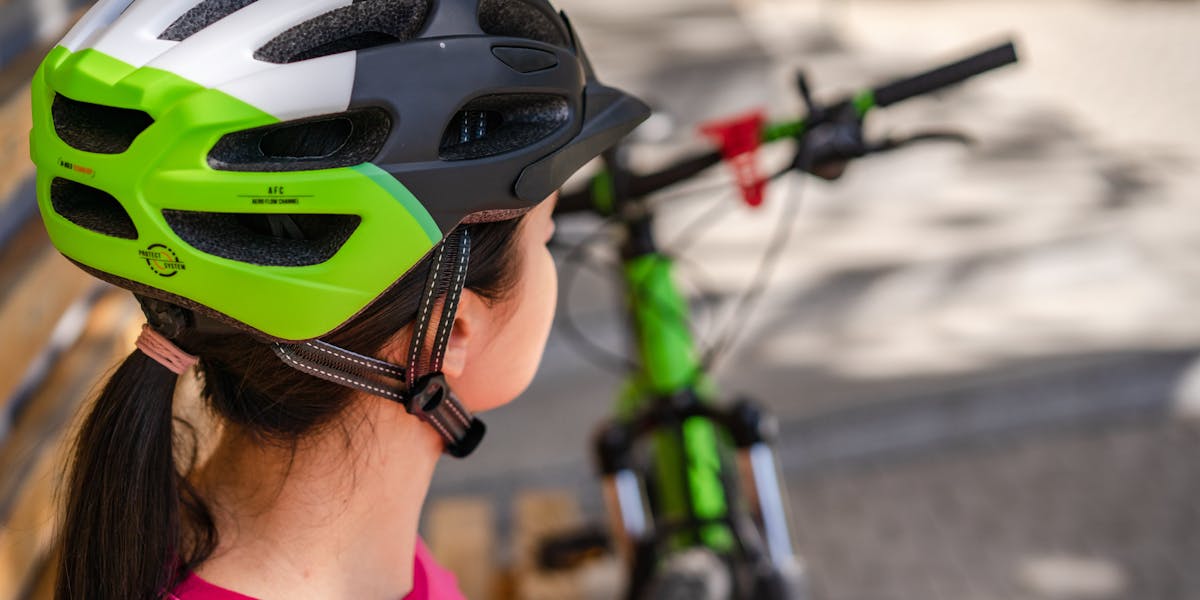
- Level position: The helmet should sit level on your head, covering the forehead. Two finger-widths above your eyebrows.
- Snug but not tight: With the retention dial tightened, the helmet shouldn't shift when you shake your head.
- Strap fit: Y-straps should meet just below and in front of the ear. Chin strap should allow one finger between strap and chin.
Helmet Types
- Road: Lightweight, well-ventilated, aerodynamic. For road cycling, gravel, commuting at speed.
- Mountain: Extended rear coverage, visor, less ventilation (for dusty trails). MIPS especially important for MTB.
- Commuter/Urban: Rounder shape, rear light mounts, often less ventilated. Style-focused but still protective.
- Aero/Time Trial: Smooth shell, minimal vents, teardrop shape. For racing and triathlons only — too hot for regular riding.