Why Build a Home Gym?
The average gym-goer spends 4–6 hours per week commuting to and from the gym. A home gym eliminates that friction entirely. Once your equipment is in place, the barrier to training is zero — you walk in, you lift. That convenience translates directly into consistency, and consistency is what actually drives fitness results.
The financial math also works in your favor. A $50/month commercial gym membership costs $600 per year, $3,000 over five years. A well-built home gym at the same price point owns that equipment forever — no monthly fees, no crowded peak hours, no waiting for a squat rack.
Step 1: Set Your Goals Before Buying Anything
The single biggest mistake home gym builders make is buying equipment for a general "fitness" goal instead of a specific one. Your goal determines your equipment list. If you want to get stronger, you need free weights and a rack. If your goal is cardio and weight loss, you need a conditioning tool (rower, bike, or jump rope). If you want both, you prioritize accordingly.
Common goal categories and their primary equipment needs:
- Strength and muscle: Barbell, plates, rack, bench, dumbbells
- Cardio and conditioning: Rowing machine, stationary bike, or jump rope + kettlebell
- Athletic performance: Plyo box, resistance bands, agility ladder, cable system
- Flexibility and recovery: Foam roller, yoga mat, mobility bands
- General fitness: Adjustable dumbbells + a cardio machine cover 80% of needs
Step 2: Measure Your Space
Before ordering any large equipment, measure your available footprint with a tape measure. A functional home gym requires less space than most people think, but you need to account for clearance — not just the equipment footprint itself.
| Space Type | Footprint Available | What Fits |
|---|---|---|
| Tight corner (1.5m x 2m) | ~30 sq ft | Adjustable dumbbells, mat, pull-up bar |
| Single-car garage half | ~80 sq ft | Rack, bench, barbell, plates, dumbbells |
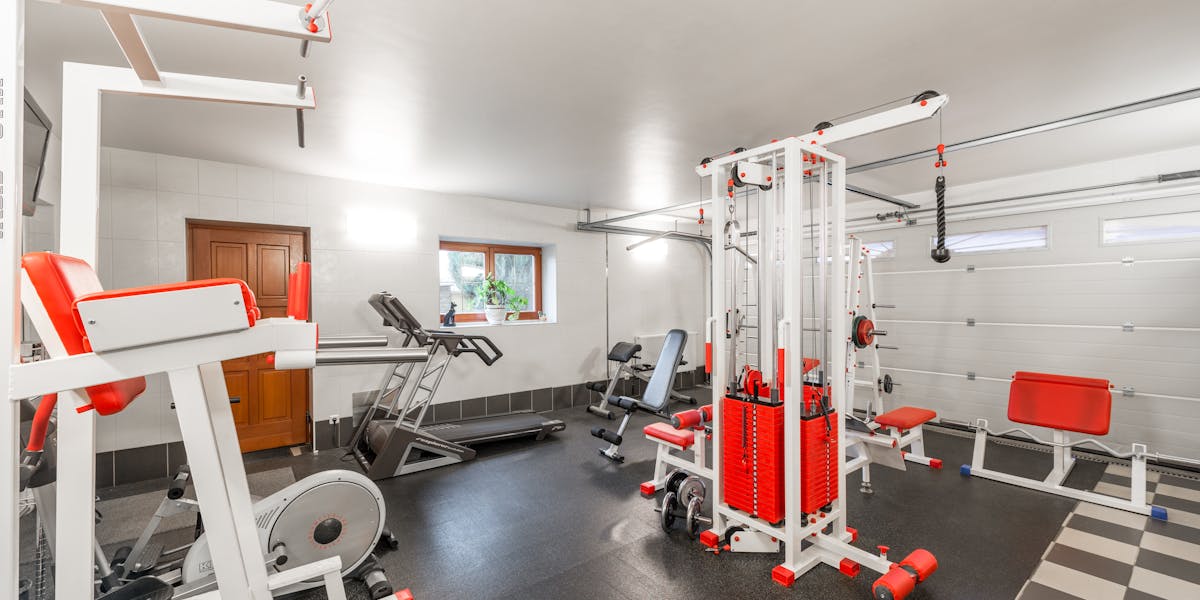
| Full single-car garage | ~160 sq ft | Full gym: rack, cardio machine, cable system, flooring |
| Dedicated room (10x12 ft) | ~120 sq ft | Full setup minus large cardio — or full setup with a compact rower |
| Double-car garage | ~400 sq ft | Complete commercial-style gym with multiple stations |
Budget Tier Breakdown
Here is the equipment TSP recommends at each investment level. These lists are ordered by return on investment — the items listed first deliver the most training variety per dollar spent.
Tier 1: $300 Starter Setup
This setup handles resistance training and light conditioning in a minimal footprint. Ideal for apartment dwellers or those testing home training before committing further.
- Adjustable dumbbells (5–50 lb): ~$200
- Pull-up doorframe bar: ~$30
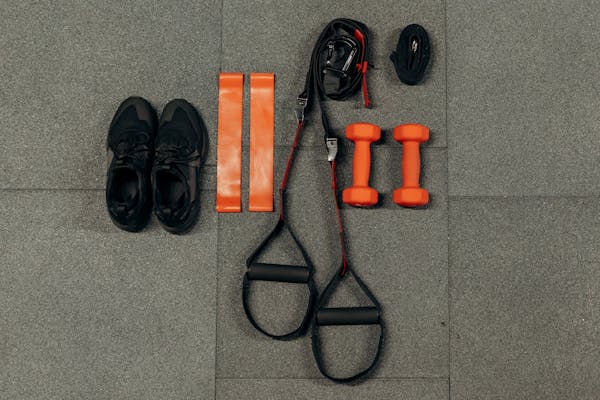
- Resistance bands set: ~$35
- Yoga/exercise mat (thick): ~$40
Tier 2: $1,000 Intermediate Setup
This adds a barbell and plates (the most versatile strength investment available) plus a bench. At this tier you can train every major movement pattern — squat, hinge, push, pull, and carry.
- Olympic barbell (20 kg): ~$180
- Weight plates (bumpers or iron, 200 lb set): ~$350
- Adjustable bench: ~$200
- Squat stands or half rack: ~$250
- Rubber flooring tiles (6x6 ft): ~$80
Power Systems Squat Stand EDITOR'S CHOICE
Adjustable squat stands are the smartest Tier 2 purchase for space-constrained setups. Unlike a full power rack, stands fold flat or move easily — while still enabling barbell squats, bench press, and overhead press with proper safety setup. Look for stands with a 1,000 lb weight capacity and adjustable J-cups.
~$250 View on Power Systems →
Tier 3: $2,500 Complete Home Gym
At this tier you add a power rack (replacing squat stands for more safety and versatility), a cable pulley system or functional trainer, and a conditioning tool. This covers 95% of commercial gym capability.
- Power rack with pull-up bar: ~$500–$800
- Olympic barbell + plates upgrade to 300 lb: ~$600
- Adjustable dumbbells (5–90 lb): ~$450
- Rowing machine or assault bike: ~$600
- Flooring (complete area): ~$150
Tier 4: $5,000+ Pro Setup
At this investment level you are building a fully-featured training facility. Common additions include: dual adjustable cable machine, GHD (glute-ham developer), reverse hyper, multiple barbells (deadlift bar, safety squat bar), a complete dumbbell set to 100 lb, and sport-specific training equipment.
Power Systems Functional Trainer (Cable Machine) BEST VALUE AT TIER 4
A dual-cable functional trainer is the single biggest capability upgrade at the $5,000 tier. It replicates dozens of cable machine exercises from the commercial gym — lat pulldowns, cable flyes, face pulls, tricep pushdowns, cable rows, and woodchoppers — in a single piece of equipment that occupies roughly 4x4 feet of floor space.
~$1,200 View on Power Systems →
Equipment Priority Order: The TSP Framework
If you are building gradually, buy in this order. Each tier unlocks significantly more training variety than the one before it, while the law of diminishing returns kicks in hard above Tier 3.
| Priority | Equipment | Why First | Approx. Cost |
|---|---|---|---|
| 1 | Adjustable dumbbells | Most versatile resistance tool; 50+ exercises | $200–$350 |
| 2 | Pull-up bar or rack | Enables vertical pulling — hardest pattern to train otherwise | $30–$300 |
| 3 | Olympic barbell + plates | Unlocks compound lifts: squat, deadlift, bench, press | $400–$700 |
| 4 | Adjustable bench | Required for pressing variations; also used for rows, RDLs | $150–$250 |
| 5 | Conditioning tool | Rower, bike, or jump rope for cardiovascular capacity | $50–$700 |
| 6 | Rubber flooring | Protects floor and equipment; reduces noise | $80–$200 |
| 7 | Power rack | Safety for heavy barbell work; also houses pull-up bar and attachments | $400–$1,000 |
| 8 | Cable/functional trainer | Isolation and accessory work at commercial-gym quality | $800–$2,000 |
Flooring and Safety
Rubber flooring is not optional for any setup involving barbells or heavy dumbbells. Standard concrete or wood flooring does not have sufficient shock absorption for dropped weights, and the noise transfer to neighbors or downstairs rooms is significant without isolation material under foot.
The standard recommendation is 3/4-inch interlocking rubber tiles for a barbell and rack setup, or 1/2-inch rolls for lighter work. For a complete garage gym, budget $100–$200 for flooring — it protects both the floor and your equipment (dropped barbells on rubber do not chip or crack the plates).
Ceiling mirrors are useful for form checking but are a lower priority than flooring. Wall storage — horizontal barbell mounts, plate trees, and dumbbell racks — matters primarily for keeping the space organized and safe (loose plates on the floor are a genuine tripping hazard).
Sources & Further Reading
Reviewed May 29, 2026. Source notes emphasize current public-health guidance, product-safety notices, manufacturer specifications, and peer-reviewed research behind this guide.
- American College of Sports Medicine — Home Exercise Environment Guidance (2025)
- NSCA Strength and Conditioning Journal — Free Weight vs Machine Training for Hypertrophy
- Power Systems Equipment Safety Specifications (powersystems.com)
- TSP Analysis: Return on Investment in Home Gym Equipment, 2026
- ACSM - resistance exercise for health
- American Heart Association - strength and resistance training
- CDC - adult physical activity guidance
- U.S. CPSC - exercise equipment recalls