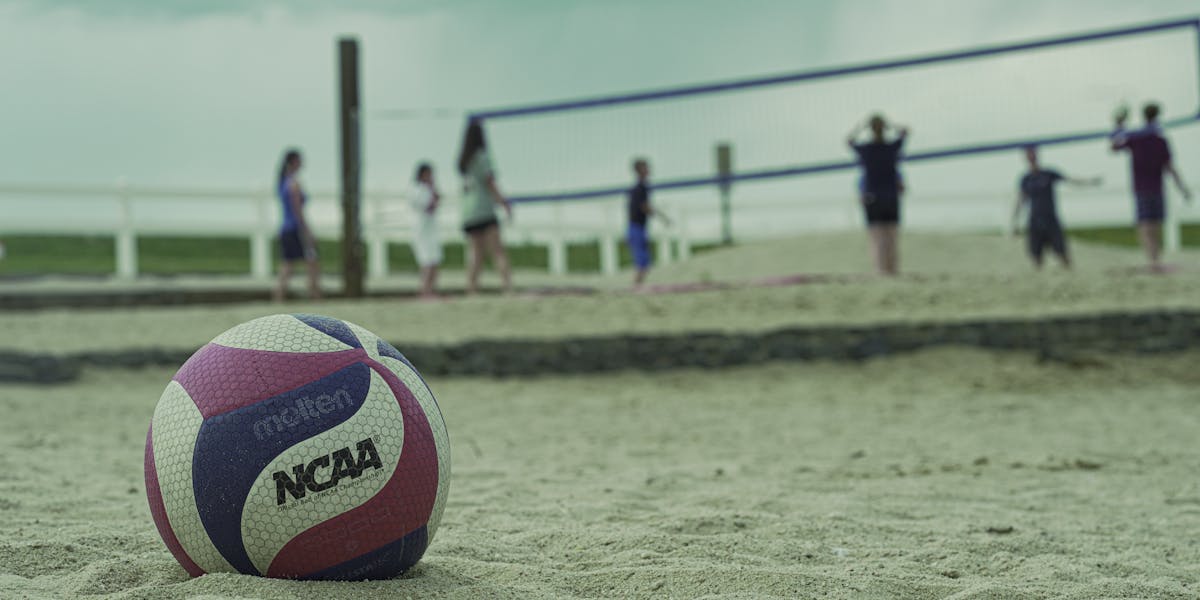
Beach volleyballs are larger, lighter, and softer than indoor balls — do not use an indoor ball outdoors. Official FIVB beach balls use 18 panels; recreational balls use 8. For backyard courts, a portable net with steel poles and anchor stakes outperforms collapsible plastic frames. Official court dimensions: 16m x 8m (52.5 x 26 ft).
Beach Volleyball vs. Indoor: What Changes
Beach volleyballs and indoor volleyballs are fundamentally different products. Using the wrong ball degrades play significantly:
- Size: Beach balls are slightly larger (66–68 cm circumference vs. 65–67 cm indoor)
- Weight: Beach balls are lighter (260–280g vs. 260–280g — similar, but pressure differs)
- Pressure: Beach balls are inflated to lower pressure (0.175–0.225 bar vs. 0.300–0.325 bar indoor), which gives them a softer feel and slower flight suitable for outdoor wind conditions
- Panel construction: Beach balls use fewer, larger panels to reduce seam number — this creates more predictable flight in wind
- Cover material: Beach balls use moisture-resistant, UV-stabilized covers
Choosing a Beach Volleyball
Official Match Balls (18-Panel)
FIVB-approved beach volleyballs use an 18-panel construction with hand-sewn butyl bladder. These are designed for tournament play and provide the most consistent flight characteristics. The Mikasa VLS300 Beach Classic is the current FIVB World Tour official ball; the Molten FLISTATEC is used at many domestic tournaments.
Shop official beach volleyballs →
Recreational Beach Balls (8-Panel)
Recreational beach volleyballs use 8-panel construction, machine-stitched, and typically cost $15–$35. They are adequate for casual backyard play and durability is often better than official balls on rough sand or asphalt. Not suitable for competitive training. Look for waterproof or moisture-resistant labeling.
Shop recreational beach volleyballs →
Training Balls
For individual serving and digging practice, a slightly heavier training ball ($20–$50) helps build arm strength and ball control. These are not used in match play but are effective for solo or two-person warmup drills.
Beach Volleyball Nets
The net is the most important infrastructure purchase. A flimsy net ruins play — it must stay at correct height, maintain consistent tension, and survive wind and repeated use.
Official Dimensions and Heights
- Net height (men): 2.43m (7 ft 11.69 in)
- Net height (women): 2.24m (7 ft 4.19 in)
- Net width: Minimum 8.5m (28 ft)
- Net depth: 1m (standard regulation)
- Court width: 8m (26 ft)
- Court length: 16m (52.5 ft)
- Free zone: Minimum 3m on each side
Portable Nets: What to Look For
- Pole material: Steel poles are heavier but stay rigid in wind. Aluminum is lighter but can flex on tight nets. Avoid fiberglass poles for competitive use.
- Height adjustment: Look for cable tension systems that allow precise net height setting (not just "men" and "women" preset clips).
- Anchor system: Sand stakes (auger-style) that screw into sand hold far better than straight push-in stakes. Essential for windy beach conditions.
- Net material: 3mm polyethylene or nylon netting handles UV exposure and moisture better than standard PE. Official nets use 10cm x 10cm mesh.
- Setup time: Best portable systems set up in 10–15 minutes by two people.
Shop portable beach volleyball nets →
Top Net Picks
Park & Sun Sports Spectrum: Steel poles, auger stakes, height adjustment cable, and carrying bag included. The most popular recreational-competitive net. Available in standard and tournament widths.
Cobra Pro: Commercial-grade steel poles with deeper auger stakes. More expensive but rated for higher wind conditions. Used at many beach volleyball clubs and parks.
Backyard Sand Court Setup
Setting up a permanent or semi-permanent sand court at home requires planning, but the result is significantly better than using grass. Here is what you need:
Sand Selection
Play sand (washed, fine-grain sand, 0.2–0.8mm grain size) provides the best playing surface. Masonry sand is cheaper but can compact. Never use beach sand with shells or high salt content — it compacts and wears on bare feet. Depth: 12–18 inches minimum for safe diving and landings.
Court Boundary
Official boundaries use 3–4mm brightly colored tape or rope laid flat. For permanent courts, border edging (timber, composite, or plastic boards) retains the sand and creates clear boundaries.
Drainage
Without drainage, heavy rain creates a puddle in the court that takes days to drain. Dig out 18–24 inches and lay a layer of crushed stone or gravel before the play sand. Slope the base slightly toward the edges.
Player Gear: What Beach Volleyball Players Need
- Sand socks: Thin neoprene sand socks protect feet on hot or rough sand. Not needed on well-maintained, fine-grain courts but useful for beach parks with coarser sand.
- Compression shorts/shorts: Fitted athletic shorts or spandex compression shorts reduce sand chafing. Avoid baggy shorts that collect sand.
- Sunglasses: Polarized sunglasses with wrap frames protect against UV and improve overhead ball tracking.
- Sunscreen: Spray-on or water-resistant formulas applied liberally — this is non-negotiable for multi-hour outdoor play.
- Knee pads: Optional but useful for defensive players who dive frequently. Thinner, more flexible pads than indoor knee pads are preferred for beach sand.
Sources & Further Reading
Reviewed May 29, 2026. Source notes emphasize beach ball, court, and net requirements plus beach-specific rule context.