Fast answer for ASICS, Mizuno and adidas volleyball shoes
Most players should start with role and court grip, then decide whether they need value stability, jump cushioning, or a faster low-profile feel.
| Reader | First Check | Why It Fits | Buy Zone |
|---|---|---|---|
| First club shoe | ASICS GEL-Rocket 11 | Official ASICS page positions it as a stable, flexible indoor court shoe at a value price. | Good around $75 |
| Jump-heavy hitter | Mizuno Wave Lightning style | Court feel and responsive support are the draw when approach jumps dominate. | Watch $120-$155 |
| Premium jump support | adidas Crazyflight | Indoor rubber outsole, EVA frame, and soft landings fit high-jump roles. | Watch $105-$150 |
| Setter/libero | Lower-profile court shoe | Floor feel, lateral bite, and predictable braking matter more than max cushion. | Buy by fit |
| Wide or growing player | Returnable court shoe | Width and toe-box comfort are hard to fix after the first practice. | Avoid final sale |
If you searched "best volleyball shoes 2026," compare ASICS, Mizuno and adidas by role
The page now adds a first-screen answer for the high-intent query: value club shoe, hitter shoe, premium jump shoe, defensive shoe, or fit-sensitive buyer.
Volleyball shoe official-product checks
Use brand pages to verify current court-shoe model names, price, width, and availability before deciding whether a ranking still reflects the market.
Volleyball shoe decision matrix
Use this before sorting by brand or discount percentage.
How this volleyball shoe page is organized
This ranking separates role fit, court grip, cushioning, lateral support, durability, and buy zone before naming a winner.
Volleyball Shoe Buying Path
Compare the role-specific picks, methodology, gear hub, and deal path before choosing a court shoe.
Volleyball shoe buy zones worth watching
Indoor court shoes often go on sale by colorway or prior model year. Use deal alerts after confirming outsole type, size, width, and return terms.
Best first click: ASICS for value, Mizuno for court feel, adidas for jump support.
This page should answer the search result fast: start with the shoe family that fits the player's movement profile, then verify size and return terms at the brand or specialty-retailer source.
Quick Picks: ASICS, Mizuno and adidas by Role
- Best value: ASICS Gel-Rocket style shoes for club players who need reliable grip without a premium price.
- Best for attackers: ASICS Gel-Netburner Ballistic style shoes for extra jump cushioning and landing support.
- Best for quick lateral movement: Mizuno Wave Momentum style shoes for setters, liberos and defensive players who prioritize court feel.
For most indoor players, choose a non-marking gum rubber outsole first, then match cushioning to jump volume and position. Running shoes do not provide the lateral stability volleyball requires.
What Makes a Volleyball Shoe Different
Volleyball shoes are engineered for four specific demands that general athletic shoes don't adequately address: multi-directional grip on hardwood and synthetic gym floors, forefoot cushioning that absorbs repeated jumping landings, lateral support for quick side-to-side movements, and a low profile that keeps the center of gravity stable during digs and slides.
Running shoes fail on every one of these criteria — they're designed for straight-line impact absorption, not lateral agility. Basketball shoes are closer but heavier than volleyball-specific designs and have thicker soles that reduce court feel. For competitive players, volleyball-specific shoes are worth the investment.
Outsole and Court Grip
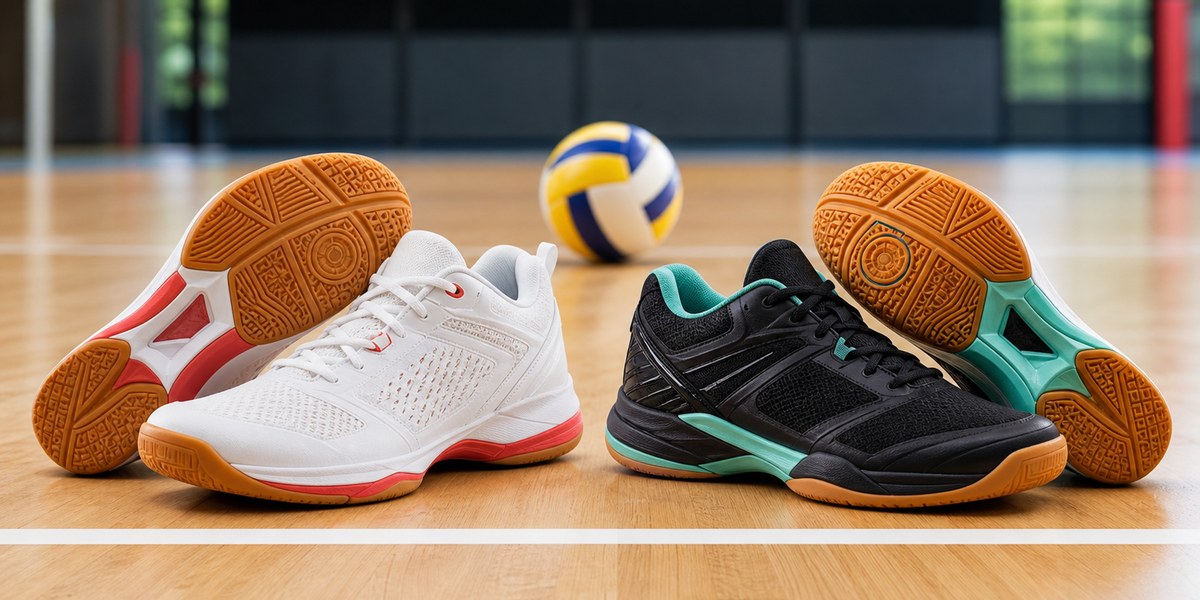
The outsole is the most critical feature of a volleyball shoe. The best volleyball shoes use gum rubber outsoles, which provide dramatically better traction on polished hardwood than standard rubber. Gum rubber is the same material used in basketball court shoes for similar reasons.
Outsole patterns for volleyball typically use a herringbone or pivot-circle pattern. Herringbone provides excellent multi-directional traction. Pivot circles (a ring pattern in the forefoot) allow quick rotational movements without sticking — important for setters who need to turn quickly to face their targets.
Important: volleyball shoes should only be worn on clean gym floors. Walking outside or on abrasive surfaces destroys the gum rubber traction quickly. Many serious players bring their shoes in a bag and change only when on the court.
Cushioning Systems for Volleyball
Volleyball generates high repetitive jump loads — a typical competitive practice involves 200–400 jump contacts. Forefoot cushioning is critical for preventing chronic patellar tendinopathy and shin splints in high-volume players.
The leading cushioning technologies in volleyball shoes:
- Asics GEL: Silicone-based cushioning insert in the heel and forefoot. One of the most popular in volleyball because it provides consistent impact absorption without bottoming out under repeated landings. Found in the Gel-Rocket and Gel-Netburner lines.
- Mizuno Wave: A dual-compound plate inside the midsole that spreads impact forces horizontally across a larger area. Provides a responsive, firm feel that many serious players prefer for court feel and quick transitions.
- Nike React Foam: Nike's proprietary foam compound that provides both energy return and cushioning. The React HyperSet uses it for a lighter, more responsive feel than GEL but slightly less stability.
- Adidas Bounce: A rubber-based foam compound in the Crazyflight line. More responsive than GEL but less cushioned. Preferred by players who want a closer-to-the-ground feel.
Best Volleyball Shoes by Position
Outside Hitter and Opposite
Outside hitters need the best jump cushioning of any position — they take the most approach-and-swing reps per practice. Prioritize forefoot GEL cushioning and heel cushioning for landing. The Asics Gel-Netburner Ballistic FF 3 is purpose-built for this position with a reinforced forefoot and superior cushioning for high-jump-volume players.
Middle Blocker
Middle blockers jump more per set than any other position on the court. They need excellent forefoot cushioning and a wide, stable base for lateral blocking slides. The Mizuno Wave Lightning Z8 is particularly popular among middles for its stability and court feel. Wider foot models should look for Asics GEL-Rocket in 2E width options.
Setter
Setters prioritize lateral agility and court feel over raw cushioning. They need to pivot and change direction more than any other position. Look for shoes with a pivot-circle outsole pattern and a lower stack height for better floor feedback. The Mizuno Wave Momentum 3 is an excellent mid-range option for setters at $100.
Libero
Liberos dive and slide more than any other position, making lateral stability and gum rubber grip the top priorities. A flexible upper helps for low-profile dives. The Asics Gel-Rocket 11 provides reliable performance at an accessible price point for liberos who prioritize court feel and quick lateral transitions.
Beach Volleyball Shoes
Most beach volleyball is played barefoot — the sand provides enough cushioning and the natural feedback of the foot on sand improves balance. However, players with foot conditions, those playing on hard-packed sand, or playing in cold weather may prefer beach-specific shoes or sand socks.
If you need footwear for beach play: look for minimalist sand socks (neoprene-based) that provide thermal protection and sand grip without restricting feel. Full court shoes are not appropriate for sand — they fill with sand immediately and interfere with footwork. Brand options from Barefoot Touch and Vincere are popular in the beach volleyball community.
Top Volleyball Shoe Picks 2026
- Best Overall: Mizuno Wave Lightning Z8 — elite grip, Wave plate cushioning, used at the highest levels. ~$140.
- Best for Hitters: Asics Gel-Netburner Ballistic FF 3 — maximum jump cushioning for high-rep hitters. ~$160.
- Best Mid-Range: Mizuno Wave Momentum 3 — strong court feel for setters and liberos. ~$100.
- Best Nike Option: Nike React HyperSet 2 — React foam cushioning, popular among players who prefer Nike fit. ~$110.
- Best Value: Asics Gel-Rocket 11 — gum rubber grip, GEL cushioning, reliable performance at $65. The best starting shoe for beginners.
Sources & Further Reading
Reviewed 2026-06-29. Source notes emphasize court-sport movement demands, volleyball injury prevention, and indoor rule context.