Quick Answer: Match the Outsole to the Surface
For smooth dirt and gravel, choose shallow, tightly spaced lugs. For mixed singletrack, use moderate lugs with enough spacing to shed dust and small debris. For mud, wet grass, loose dirt, and snow, choose deeper, widely spaced lugs. Add a rock plate or firmer midsole when sharp stone is the problem.
- Packed dirt: shallow, close lugs keep the ride smooth.
- Mixed trail: moderate lugs balance grip and comfort.
- Mud and loose terrain: deeper, wider lugs bite and clear debris.
| Terrain | Outsole to Look For | What to Avoid |
|---|---|---|
| Hardpack and gravel | Shallow lugs, flexible ride, durable rubber | Very tall mud lugs that feel unstable on firm ground |
| Roots and mixed singletrack | Moderate lugs, secure upper, protective toe bumper | Road outsoles with little side bite |
| Mud and wet grass | Deep, widely spaced lugs that shed muck | Tightly packed tread that cakes over |
| Sharp rock | Sticky rubber plus rock plate or firm midsole | Soft, exposed foam outsoles |
How Lug Depth Changes the Ride
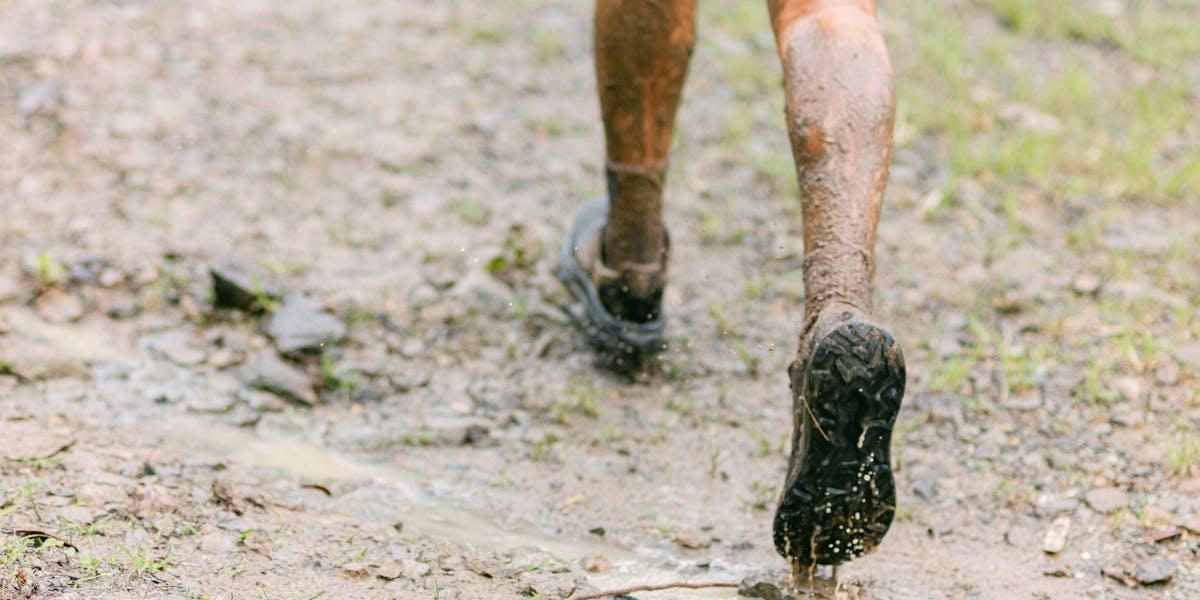
Lugs are the raised rubber shapes on the bottom of a trail running shoe. Shallow lugs feel smoother and more efficient on hardpack, gravel paths, and buffed-out park trails. Deep lugs dig better into mud, loose dirt, wet grass, and snow, but they can feel tall and awkward on pavement or hard rock.
Most runners are best served by a moderate all-around lug pattern unless they regularly run in one extreme condition.
Spacing Matters as Much as Height
A deep lug that is packed too tightly can hold mud instead of clearing it. Wide spacing lets the outsole release soft dirt and muck as you run. Tighter spacing can be better on dry dirt because it keeps more rubber on the ground.
Look at the spaces between lugs, not just the listed millimeter depth. Mud shoes look open and toothy; road-to-trail shoes look smoother and flatter.
Rubber Compound, Rock Plates, and Protection
Sticky rubber helps on slick rock and wet roots, while harder rubber often lasts longer on dry, abrasive trails. A rock plate is a protective layer that spreads impact from sharp stones so the shoe does not feel bruising underfoot.
A rock plate is useful on technical routes, but it can make the shoe stiffer. If your trails are mostly smooth dirt, extra stiffness may be unnecessary.
Simple Selection Rules
If you run from road to park trail, choose road-to-trail or light-trail shoes with shallow lugs. If you run normal hiking trails, choose a rugged trail shoe with moderate lugs and a secure upper. If your routes are muddy, steep, rocky, or off-trail, choose aggressive tread and more protection.
Fit still matters first. A perfect outsole on a shoe that slips at the heel or crushes the toes is the wrong shoe.
Frequently Asked Questions
What lug depth is best for trail running?
Most runners do well with moderate lugs for mixed terrain. Shallow lugs suit hardpack and gravel, while deeper lugs suit mud and loose ground.
Are deeper lugs always better?
No. Deep lugs can feel unstable or slow on hard surfaces. They are best when the ground is soft enough for the lugs to bite.
Do I need a rock plate?
Use a rock plate for sharp, rocky trails or long runs where stone bruising is common. Skip it if you prefer flexibility and run mostly smooth dirt.
Can I use road shoes on trails?
Road shoes can work on smooth dry paths, but trail shoes give better traction, upper security, and protection when the surface gets uneven.
Sources & Further Reading
Reviewed June 3, 2026. Source notes emphasize official standards, sport safety guidance, and practical gear-selection references.