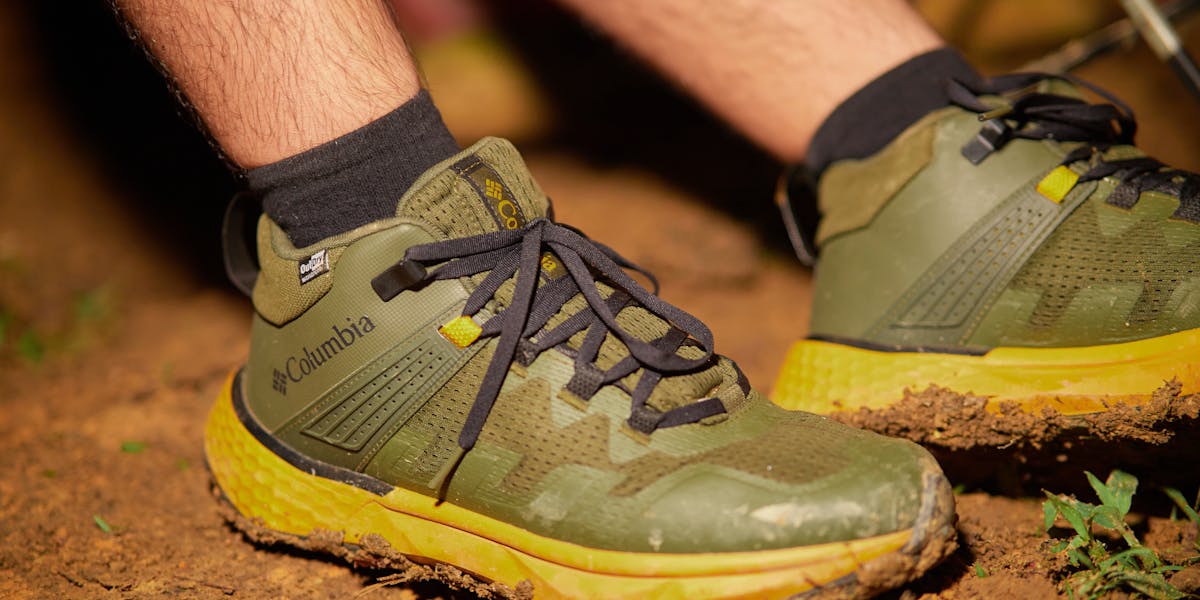
The Ankle Support Myth
Research in the British Journal of Sports Medicine found high-cut boots do not significantly reduce ankle sprains. What prevents sprains is proprioception and ankle strength. The US military has moved to lighter footwear for many operations reflecting this science.
Weight Rule
Every pound on your feet equals ~5 pounds on your back in energy expenditure (University of Colorado). A 3 lb boot vs 1.5 lb trail runner = equivalent of 7.5 extra pack pounds.
When Trail Runners Win
Day hikes under 10 miles, light pack (<15 lbs), maintained trails, fast-and-light backpacking. Dry faster, breathe better, reduce fatigue.
Salomon Speedcross 6
Aggressive lugs, Contagrip MA, quick-lace. Default trail runner for muddy terrain.
HOKA Speedgoat 7
Vibram Megagrip with 5mm lugs and protective trail cushioning. Current max-cushion pick for rocky terrain and long trail days.
When Boots Win
Heavy packs (30+ lbs), off-trail scrambling, winter/snow, ankle instability history, sharp rock terrain.
Salomon X Ultra 4 Mid GTX
Advanced Chassis, Contagrip MA, Gore-Tex. Light enough to feel like a shoe, supportive for heavy packs.
Merrell Moab 3 Mid Waterproof
Vibram TC5+, bellows tongue, TPU heel. Best-selling hiking boot for a decade.
La Sportiva Nucleo High II GTX
Vibram Nano, Impact Brake System, Gore-Tex Surround. Premium scrambling boot.
Sources & Further Reading
- NPS hiking safety — official trail-safety guidance on planning, footwear, weather, and emergency preparation.
- American Hiking Society Ten Essentials — hiking preparedness and gear checklist context.
- Bohne and Abendroth-Smith ankle support study — research on ankle support and proprioception in hiking footwear.