Outdoor & Adventure · Buyer's Guide

Hiking Boot Buying Guide: Ankle Support, Waterproofing, and Break-In Reality

Affiliate disclosure: This article contains affiliate links. We may earn a small commission at no extra cost to you.

Fit, traction, waterproofing, pack load, and terrain matter more than boot height alone when choosing between trail shoes and hiking boots.

Top view of rain-soaked brown boots standing on lush green grass outdoors, showcas...

The Boot vs Trail Shoe Debate

Footwear research and hiking safety guidance point to fit, traction, pack load, terrain, and conditioning as the variables that matter most. Mid-cut boots can help under heavier loads or rough ground, but trail shoes can be reasonable for lighter day hikes when they fit well and grip the surface.

  • Day hikes, under 20 lbs: Trail running shoes or low-cut hikers
  • Day hikes, 20-35 lbs or rocky terrain: Mid-cut hiking boots
  • Multi-day, 35+ lbs: Mid-cut or high-cut boots with stiff midsoles
  • Mountaineering or snow: Full-shank boots (different category)
HIKING FOOTWEAR DECISION MATRIX Trail RunnersUnder 20 lbs | Day hikes12-24 oz/pair Light Hikers20-35 lbs | Rocky terrain24-36 oz/pair Backpacking Boots35-50 lbs | Multi-day36-48 oz/pair Mountaineering50+ lbs | Snow/ice48-72 oz/pair 💡 Every ounce on feet = 5 ounces on back (energy research)

Waterproofing: Misunderstood

Gore-Tex keeps water out but traps heat inside. In warm conditions (50°F+), non-waterproof mesh dries faster. REI's trail team recommends waterproof primarily for cold weather and wet climates.

Top Picks
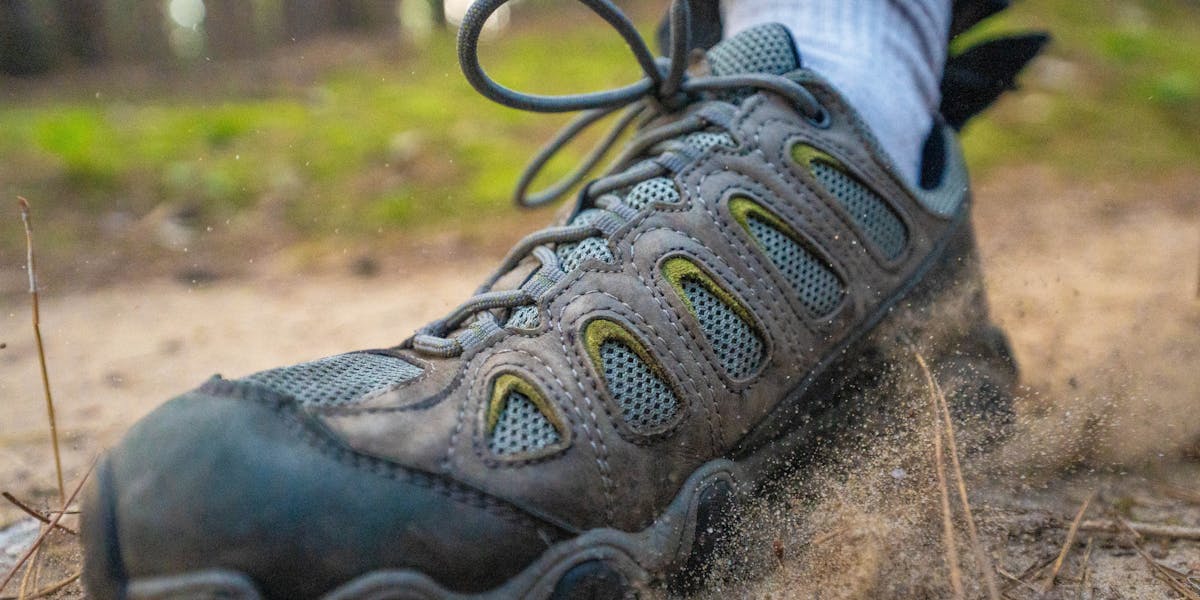
Hiking boot traction and fit detail
Salomon X Ultra 4 Mid GTX
Stable mid-cut hiker with aggressive outsole traction and a waterproof membrane. Confirm fit before committing to long trips. 28 oz/pair.
Hiking boot traction and fit detail
Merrell Moab 3 Mid Waterproof
Best-selling hiking boot for 15+ years. Minimal break-in, Vibram outsole. 32 oz/pair.

Break-In Reality

  • Trail runners: 0-5 miles
  • Mid-cut boots: 10-25 miles
  • Heavy boots: 25-50 miles
  • If it still hurts after 50 miles: wrong boot. Return it.
Sources & Further Reading

Frequently Asked Questions

Do I need hiking boots or hiking shoes?

Hiking shoes (low-cut) are lighter and sufficient for day hikes on maintained trails with light loads. Boots (mid/high-cut) provide ankle support and stability for heavy packs, rough terrain, and multi-day trips. Most recreational hikers are fine with hiking shoes unless carrying 30+ lbs.

Sources & Further Reading

Reviewed May 29, 2026. Source notes emphasize safety, fit, standards, and outdoor-use references behind this guide's recommendations.

Should hiking boots be waterproof?

Waterproof boots (Gore-Tex lined) keep feet dry in wet conditions but run hotter and dry slowly if water gets in from the top. Non-waterproof boots are cooler and dry faster. For consistently dry climates, skip waterproofing. For variable conditions, waterproof is worth it.

How should hiking boots fit?

Try boots in the afternoon (feet swell). Wear your hiking socks. You should have a thumb's width of space in front of your longest toe. No heel slippage when walking uphill. Toes shouldn't hit the front when walking downhill. Break them in with 20-30 miles before a big trip.

More from Outdoor & Adventure

All Outdoor & Adventure →
Backpack Sizing and Fit Guide: How to Load Test Before You Hit the Trail
Outdoor & Adventure

Backpack Sizing and Fit Guide: How to Load Test Before You Hit the Trail

Torso length, hip belt fit, and load distribution physics.

11 min read
Camping Tent Buying Guide: Weight vs Space vs Weather Protection Tradeoffs
Outdoor & Adventure

Camping Tent Buying Guide: Weight vs Space vs Weather Protection Tradeoffs

3-season vs 4-season, freestanding vs trekking pole, every decision explained.

14 min read
GPS Handhelds vs Phone Apps for Backcountry Navigation
Outdoor & Adventure

GPS Handhelds vs Phone Apps for Backcountry Navigation

Garmin InReach, offline maps, and dedicated GPS compared for reliability.

12 min read

Equipment Intel, Weekly

New analysis, test results, and gear science — delivered to your inbox.