Outdoor & Adventure ยท Buyer's Guide

Camping Tent Buying Guide: Weight vs Space vs Weather Protection Tradeoffs

Affiliate disclosure: This article contains affiliate links. We may earn a small commission at no extra cost to you.

The right tent is a tradeoff between packed weight, livable space, weather protection, condensation control, and how often you will move camp.

Mother serving food to her children at a campsite with orange tents in the backg

The Three Tradeoffs Every Tent Buyer Faces

Every tent is a compromise between weight, livable space, and weather protection. You can optimize for two, not all three. Check trail weight, floor area, vestibule coverage, pole structure, and campsite conditions together instead of relying on a single award label.

TENT CATEGORIES โ€” WEIGHT VS WEATHER Ultralight1-2 lbs | Single wall | Trekking poleFair weather Lightweight 3-season2-4 lbs | Double wall | FreestandingMost conditions Standard 3-season4-6 lbs | Double wall | FreestandingRain, wind, light snow 4-season6-10 lbs | Expedition | Pole structureAll conditions + snow load ๐Ÿ’ก 90% of campers need a 3-season tent. 4-season only for winter camping. Sources: NPS camping guidance; manufacturer specifications

Freestanding vs Non-Freestanding

Freestanding tents (use pole structure, can be moved after pitching) are better for rocky ground, snow, and platforms. Non-freestanding/trekking pole tents save 1-2 lbs but require stakes and guy lines โ€” no good on rock.

Top Picks

Big Agnes Copper Spur HV UL2
A lightweight freestanding backpacking benchmark. Claimed 2 lbs 12 oz trail weight, generous headroom for the weight, and strong livability for two-person trips.
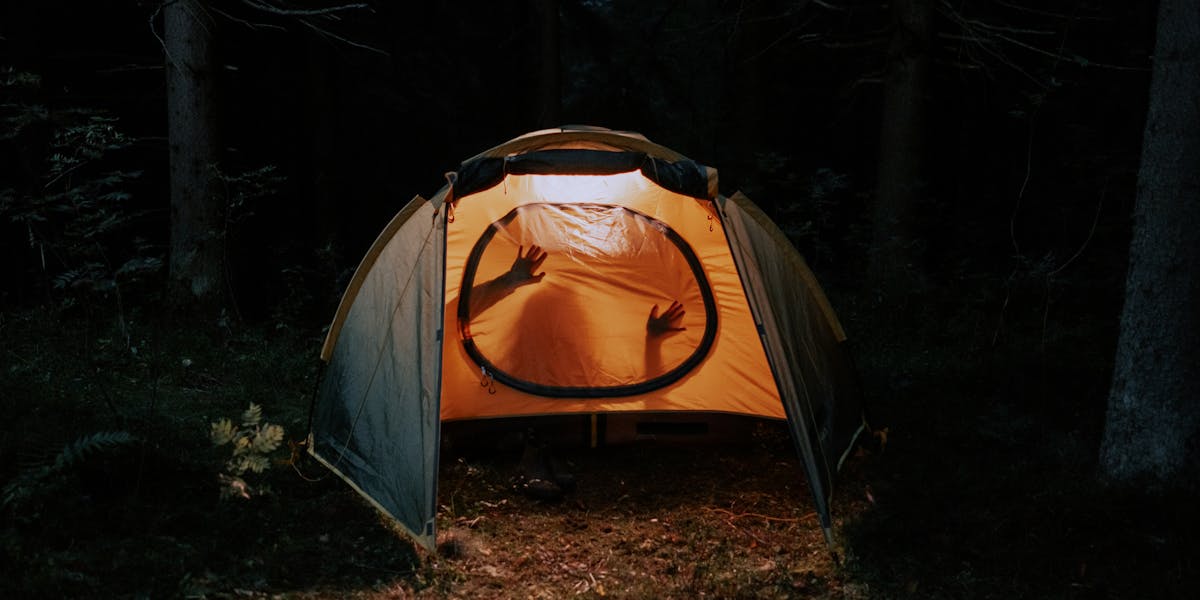
Camping tent setup and weather protection
REI Co-op Half Dome SL 2+
Best value in the category. 3 lbs 15 oz, freestanding, great ventilation. Bigger than most 2P tents. REI's best-seller for years.
Camping tent setup and weather protection
Nemo Dagger OSMO 2P
OSMO fabric (recycled, doesn't sag when wet). 3 lbs 5 oz trail weight. Best livability-to-weight ratio in testing.

The Condensation Problem

Single-wall tents and poorly ventilated double-wall tents produce interior condensation. In humid conditions, you'll wake up with a wet sleeping bag. Double-wall tents with good mesh ventilation minimize this. Always leave vestibule vents open.
Sources & Further Reading

Frequently Asked Questions

What size tent should I buy?

For comfortable camping, buy one size larger than your group. Two people should get a 3-person tent. Solo backpackers can get away with a true 1-person tent. "Person ratings" assume shoulder-to-shoulder sleeping โ€” add a size if you want room for gear inside.

Sources & Further Reading

Reviewed May 29, 2026. Source notes emphasize safety, fit, standards, and outdoor-use references behind this guide's recommendations.

What is the difference between 3-season and 4-season tents?

3-season tents handle spring through fall conditions with mesh panels for ventilation and lighter construction. 4-season tents withstand heavy snow, wind, and cold with sturdier poles, less mesh, and snow-shedding shapes. Most campers only need 3-season tents unless they camp in winter storms.

How much should I spend on a backpacking tent?

Budget $150-250 for a quality entry-level backpacking tent. $250-400 gets lighter weight and better materials. $400+ is ultralight territory (under 2 lbs). For car camping, $100-200 buys a spacious, durable tent since weight doesn't matter.

More from Outdoor & Adventure

All Outdoor & Adventure โ†’
Hiking Boot Buying Guide: Ankle Support, Waterproofing, and Break-In Reality
Outdoor & Adventure

Hiking Boot Buying Guide: Ankle Support, Waterproofing, and Break-In Reality

Trail shoes vs hiking boots vs mountaineering boots decoded.

13 min read
Backpack Sizing and Fit Guide: How to Load Test Before You Hit the Trail
Outdoor & Adventure

Backpack Sizing and Fit Guide: How to Load Test Before You Hit the Trail

Torso length, hip belt fit, and load distribution physics.

11 min read
GPS Handhelds vs Phone Apps for Backcountry Navigation
Outdoor & Adventure

GPS Handhelds vs Phone Apps for Backcountry Navigation

Garmin InReach, offline maps, and dedicated GPS compared for reliability.

12 min read

Equipment Intel, Weekly

New analysis, test results, and gear science โ€” delivered to your inbox.