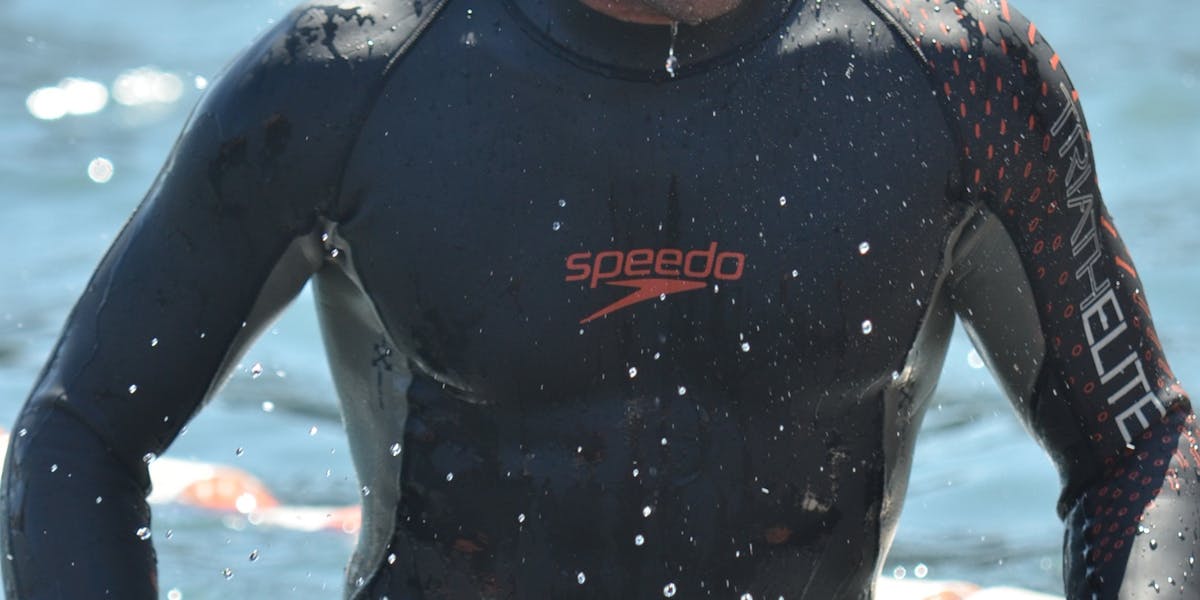
Fast answer for "USA Triathlon wetsuit rules"
Race rules decide whether a wetsuit is legal, optional, required, or prohibited. Buy for your event series and water temperature before comparing buoyancy panels.
| Reader | First Check | Why It Fits | Buy Zone |
|---|---|---|---|
| USAT age-group race | Check race-day official temp | USAT Nationals notes wetsuits are forbidden at 76.2 F or above for championship/world-qualifier age-group races. | Verify event rules |
| IRONMAN race | 76.1 F competitive cutoff | 2026 IRONMAN rules allow wetsuits up to and including 24.5 C / 76.1 F for competitive age-group use. | Check 83.8 F optional zone |
| Cold open water | Mandatory/thermal guidance check | Rules and safety guidance can require wetsuits below cold-water thresholds. | Practice before racing |
| First triathlon | Rental or returnable entry suit | Fit and shoulder freedom are hard to predict from size charts alone. | Avoid final sale |
| Warm race venue | Sleeveless/speedsuit/no-wetsuit plan | If race day is too warm, a full suit may be illegal or uncomfortable. | Train both ways |
If you searched "wetsuit legal," check the sanctioning body before buying
The page now leads with USAT/IRONMAN/World Triathlon rules, then fit, buoyancy, sleeve choice, and rental logic.
Triathlon wetsuit legality source check
Wetsuit legality changes by sanctioning body, event, water temperature, and race-day measurement. Verify USA Triathlon, IRONMAN, or World Triathlon rules before buying.
Triathlon wetsuit decision matrix
Use this before choosing a full-sleeve or sleeveless suit.
Quick Answer: Triathlon Wetsuit Sizing and USAT Rules
Choose a triathlon-specific wetsuit that feels snug through the torso, seals at the neck, wrists and ankles, and still lets your shoulders rotate without pulling. Under current USA Triathlon rules, wetsuits cannot exceed 5 mm thickness anywhere. For most non-national age-group races, wetsuits are fully competitive at 60.7-78.0°F, mandatory at 60.6°F and below, and may be allowed in a non-competitive wave from 78.1-84.0°F when the race permits it.
- Size by brand chart first: use height, weight and chest measurements, then confirm shoulder mobility.
- Race legality: check the event guide because national championships, World Triathlon qualifiers and IRONMAN events can use different cutoffs.
- First-timer fit: a good tri wetsuit feels tighter than a surf suit on land but should not restrict breathing in the water.
Triathlon Wetsuit Basics
A triathlon wetsuit serves a different purpose than a surf wetsuit. Its primary job is buoyancy — keeping your hips and legs elevated in the water for a more hydrodynamic swim position. A good tri wetsuit raises hip position by 3-5 degrees, reducing drag and improving speed significantly.
The secondary function is insulation in cold open water. Most triathlon swims in sub-75°F water will benefit from a wetsuit — some races require them below 60°F.
USAT Wetsuit Rules and Legal Temperatures
| Race context | Water temperature | Rule |
|---|---|---|
| Most non-national age-group races | 60.6°F (15.9°C) and below | Wetsuit mandatory. |
| Most non-national age-group races | 60.7-78.0°F (16.0-25.5°C) | Wetsuit permitted for competitive racing. |
| Most non-national age-group races | 78.1-84.0°F (25.6-28.8°C) | Race may allow wetsuits in a non-competitive wave; athletes are not eligible for rankings or age-group awards. |
| Most non-national age-group races | 84.0°F (28.9°C) and above | Wetsuit prohibited. |
| USA Triathlon national championship or World Triathlon qualifying age-group races | 76.2°F (24.6°C) and above | Wetsuit prohibited. |
Maximum thickness: 5 mm anywhere on the wetsuit, including overlapping areas on two-piece suits. Wetsuits may cover the body except the face, hands and feet, and mandatory wetsuit races require at least torso and back coverage.
World Triathlon and IRONMAN events can use their own event-specific implementation, so always check the athlete guide before race day.
Thickness by Temperature
- 65-78°F: Sleeveless tri suit or 2mm fullsuit — maximum arm mobility
- 58-65°F: 3/2mm fullsuit — standard all-around triathlon wetsuit
- Below 58°F: 5/4mm fullsuit — maximum warmth and buoyancy
Key Features
- Arm flexibility: Arms must rotate fully for freestyle. Premium suits have 1.5-2mm arm panels. The SCS (Super Composite Skin) coating reduces water resistance.
- Buoyancy zones: Thicker 5mm foam in the hips/lower body for elevation. Thinner arms for rotation.
- Zipper design: Back zip (most common, easiest on/off) vs front zip (better freedom of movement). Back zip wins for transitions.
- Neck comfort: Triathlon swims require breathing effort — a tight neck causes panic. Test comfort in the store by simulating breathing hard.
Best Triathlon Wetsuits 2026
Sources & Further Reading
Reviewed 2026-06-29. Source notes were rechecked against USA Triathlon rules and Nationals, IRONMAN 2026, World Triathlon, World Aquatics, and race-policy sources for wetsuit legality and temperature-rule context.