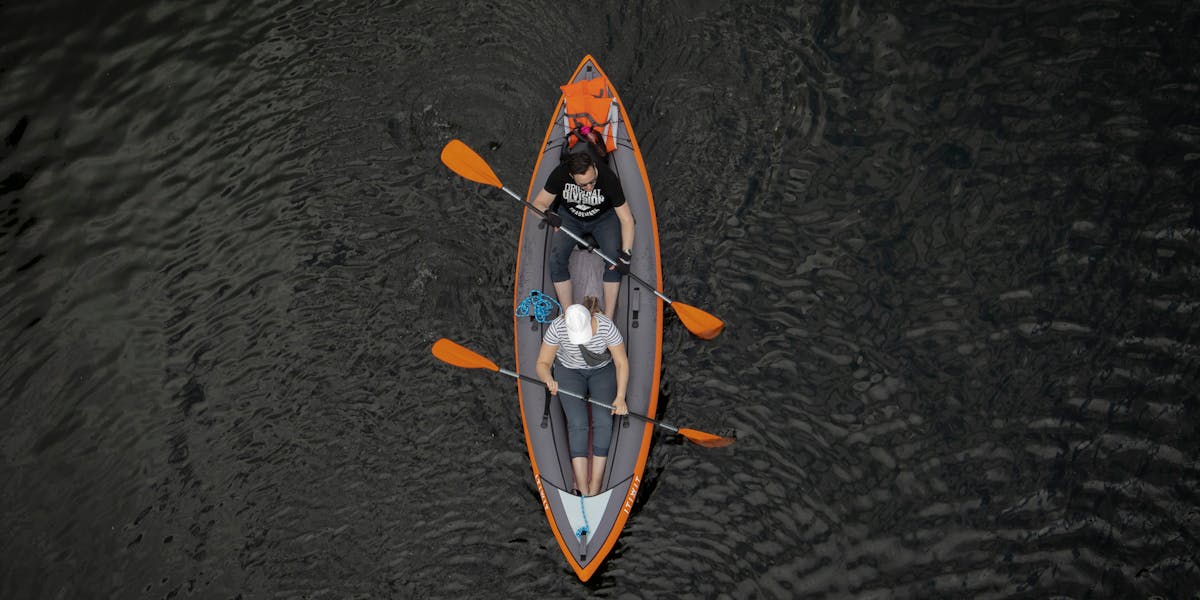
Quick Answer: Size the Canoe Around People Plus Gear
A 14- to 15-foot canoe is easy to handle for solo or casual short trips. A 16- to 17-foot canoe is the common sweet spot for tandem paddling, weekend gear, and better tracking. Wider canoes feel more stable, while narrower canoes paddle more efficiently. Always compare rated capacity against real load: paddlers, gear, water, pets, and a margin for waves or wind.
- Shorter canoe: easier to store, turn, and transport.
- Longer canoe: better tracking, speed, and load room.
- Wider canoe: more initial stability but usually slower paddling.
| Use Case | Likely Size Range | Priority |
|---|---|---|
| Solo pond or fishing use | 12 to 14 feet | Low weight, easy turning, comfortable seat position |
| Tandem day trips | 15 to 16 feet | Stability, manageable transport, enough legroom |
| Family or camping weekends | 16 to 17 feet | Capacity, tracking, freeboard, gear volume |
| Long flatwater touring | 17 feet and up | Efficiency, straight tracking, load carrying |
What Canoe Length Changes
Length is the first sizing filter. Longer canoes usually track straighter, hold more gear, and paddle more efficiently once moving. Shorter canoes are easier to turn, lift, store, and load on a vehicle.
For many recreational buyers, the 16- to 17-foot range works because it can carry two adults and day gear without becoming too hard to manage at the launch.
Width, Stability, and Speed
Width, also called beam, is strongly tied to stability. Wider recreational canoes feel calmer when kids move around, when a dog shifts weight, or when a beginner steps in. Narrower canoes usually paddle more efficiently because there is less hull pushing through the water.
Do not judge stability by width alone. Hull shape matters too. A flat-bottom canoe can feel very stable at rest, while a shallow-arch hull can feel better as the water gets uneven.
How to Think About Capacity
Capacity is not just the number of people a canoe can fit. Add paddler weight, clothing, cooler, dry bags, fishing gear, water, safety equipment, and anything strapped to the boat. Then leave margin so the canoe still has enough freeboard when wind or wake shows up.
If your load is close to the published maximum, move up in canoe size or reduce gear. A canoe paddles better when it is not loaded to the edge of its capacity.
Match the Canoe to Your Real Trips
A canoe that looks perfect on paper can be wrong if you cannot store it, load it, or carry it to the water. Before buying, measure storage space, car rack spread, launch distance, and the heaviest carry you expect to make.
For family use, prioritize stability and easy entry. For touring, prioritize tracking and capacity. For solo paddling, prioritize seat position, weight, and whether the canoe trims correctly with one paddler.
Frequently Asked Questions
What is the best canoe length for beginners?
Many beginners do well with a stable 15- to 16-foot recreational canoe for tandem day trips, or a shorter 12- to 14-foot canoe for solo use.
Is a wider canoe always better?
No. Wider canoes usually feel more stable, but they can be slower and harder to paddle efficiently.
How much capacity do I need?
Add the weight of all paddlers, gear, water, pets, and safety items, then leave a margin instead of loading the canoe to its maximum rating.
Can one person paddle a tandem canoe?
Yes, but trim and wind control can be difficult. Solo paddlers should test seat position and weight before buying a tandem hull.
Sources & Further Reading
Reviewed June 3, 2026. Source notes emphasize official standards, sport safety guidance, and practical gear-selection references.