Fast answer for "best soccer ball 2026"
Start with use case, not the most expensive ball. The current official World Cup 26 Trionda line creates clearer match, competition, league, training, club, futsal, and youth tiers.
| Reader | First Check | Why It Fits | Buy Zone |
|---|---|---|---|
| Elite match play | adidas FIFA World Cup 26 Trionda Pro | Current flagship official-match-ball path; use only when premium feel and certification matter. | Worth checking near $170 |
| Competitive teams | Trionda Competition or League | Better value when the team needs match-like behavior without pro-ball replacement cost. | Watch $45-$65 |
| Daily practice | Adidas Tiro League or Trionda Training | Durability and pressure retention matter more than premium panel feel. | Strong around $28-$38 |
| Youth players | Correct size 3 or 4 ball | Technique suffers when younger players train with oversized balls. | Buy by league age chart |
| Futsal | Low-bounce futsal ball | Outdoor balls rebound too high on indoor courts and change the touch demand. | Check futsal label |
How this soccer ball review is organized
This page now follows the TSP gear-review system: use-case winners, certification notes, size and surface guidance, buy zones, and a direct path into the broader soccer review hub.
Soccer Ball Smart Buying Path
Use this soccer ball ranking for the shortlist, then compare the methodology, ball-type guide, and deal path before choosing size, surface, and certification level.
If you searched "best soccer ball 2026," split match, training, futsal and World Cup tiers
The strongest 2026 answer now separates official-match-ball interest from the more common club, training, youth, and futsal purchases.
2026 soccer-ball currentness check
Use official FIFA and adidas source pages to separate certified match balls from training, league, club, mini, beach, and futsal balls.
Soccer ball decision matrix
Use this before comparing colorways or replica looks.
How to avoid buying the wrong soccer ball in 2026
Current soccer-ball pages can mix pro match balls, league balls, training balls, futsal balls, and youth sizes. TSP keeps those purchase paths separate so a premium ball does not get recommended for the wrong surface or player.
Soccer ball buy zones to watch this week
Training balls change price more often than pro match balls. Use these thresholds before paying full retail, then pick the size and surface that matches your league.
Wave 2 update: this guide now favors direct brand or soccer-specialist merchant links over retailer search results.
FIFA Certification: Quality Pro vs FIFA Basic
The FIFA Quality Program for Footballs establishes two certification tiers: FIFA Quality Pro and FIFA Quality (formerly FIFA Inspected). These certifications verify that a ball meets specific performance standards for circumference, roundness, rebound, water absorption, pressure loss, and shape retention.
FIFA Quality Pro is the highest certification — required for all top-level professional competitions including the World Cup, Champions League, and national league play. Balls at this tier undergo the most rigorous testing and are built to perform consistently under all weather conditions.
FIFA Quality (Basic) is the entry-level certification, appropriate for amateur competition, training, and youth leagues. These balls meet professional standards for safety and roundness but have slightly wider tolerances for performance metrics.
Direct adidas product page replaces the old marketplace search fallback.
Ball Construction: Panels, Bladder, and Cover
A soccer ball consists of three main components: the cover (outer shell), the backing (layers bonded to the cover), and the bladder (inner air chamber). The way these components are assembled determines the ball's feel, durability, and flight characteristics.
| Construction | Panel Count | Touch/Feel | Durability | Typical Use |
|---|---|---|---|---|
| Hand-stitched leather | 32 | Excellent | Low (water absorbent) | Premium match (older) |
| Machine-stitched PU | 32 | Good | High | Training, recreational |
| Thermally bonded | 6–14 | Excellent | High | Pro match balls |
| Low-bounce (futsal) | 32 | Firm | High | Futsal, indoor |
Thermal bonding (used in elite match balls like the Adidas Champions League and Nike Flight) bonds panels using heat and adhesive rather than stitching. This eliminates the raised seam lines of stitched balls, creating a more consistent flight path — critical when ball trajectory at high velocity is measured in millimeters.
Bladder type matters for pressure retention. Latex bladders provide better touch and energy return but lose pressure faster and require more frequent inflation. Butyl bladders retain pressure longer and are the standard in training balls.
Direct adidas product page replaces the old marketplace search fallback.
Match Balls vs Training Balls vs Replica Balls
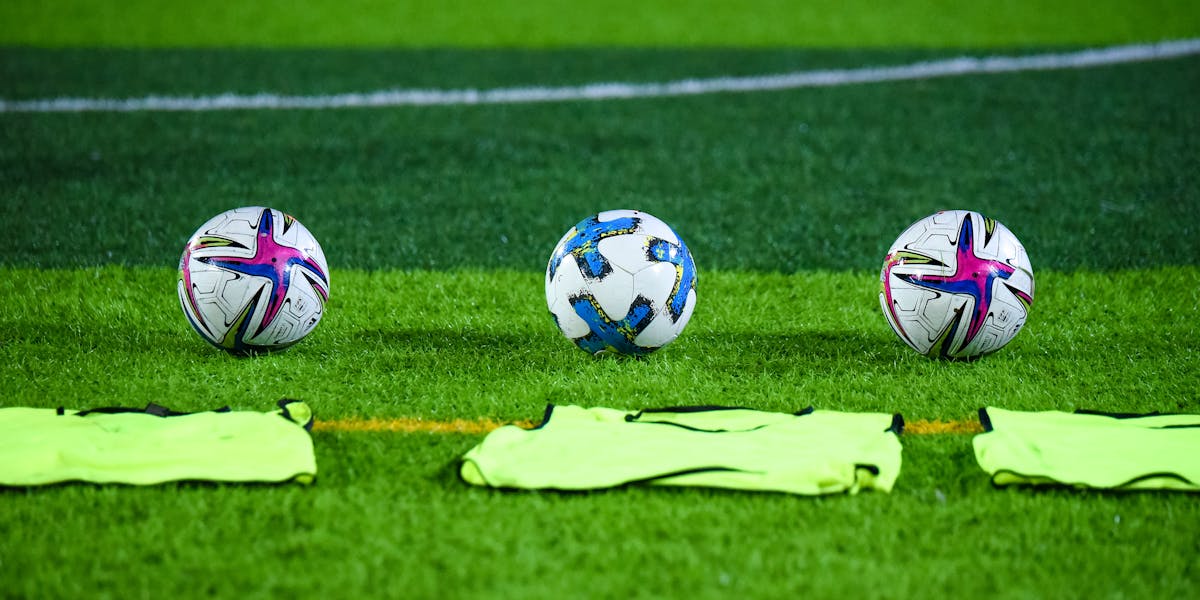
Match balls are the top-of-line, FIFA Quality Pro certified balls used in official competition. They're engineered for optimal aerodynamics, consistent bounce, and water resistance. Prices range from $100–175.
Training balls (also called "club" or "league" balls) are FIFA Quality Basic certified with more durable covers, butyl bladders, and machine stitching. They're built to survive thousands of kicks on rough surfaces. Prices range from $20–60.
Replica ("glider") balls match the visual design of official match balls but lack certification. They're suitable for casual play and kicking around, but shouldn't be used for competitive training where ball behavior affects player development.
Direct Niky's Sports product page replaces the old marketplace search fallback for the Nike Flight ball.
Size Guide: Choosing the Right Size by Age
Soccer balls come in sizes 1–5. Size 5 is the official match size for all players age 13 and above. Using the correct size during development is critical — undersized balls can allow poor technique habits to form.
- Size 1: Mini/skills ball — any age, for close-control drills
- Size 3: Ages 5–8 (U6–U8 leagues)
- Size 4: Ages 8–12 (U9–U12 leagues)
- Size 5: Ages 13+ through professional play
Top Picks 2026
adidas FIFA World Cup 26 Trionda Pro Ball EDITOR'S CHOICE — MATCH BALL
The FIFA World Cup 26 Trionda Pro is the current official-match-ball check for FIFA Quality Pro shoppers in 2026. The thermally bonded panel construction eliminates seams that would affect aerodynamics. The CTBTCH bladder retains pressure reliably across temperature ranges. If you play competitive adult soccer or are shopping for a premium ball, this is the correct pick. It's expensive, but the difference in feel and flight versus a training ball is immediately noticeable.
~$170 Check Price at adidas
Adidas Tiro League Training Ball BEST VALUE — TRAINING
For daily training, the Tiro League is the most cost-effective FIFA Basic certified option. Machine-stitched TPU cover handles rough surfaces far better than premium match balls. The butyl bladder maintains pressure well session-to-session. At under $30, teams can afford multiple balls without budget concerns. This is the ball most academy coaches recommend for practice.
Futsal Balls: Low-Bounce Explained
Futsal balls are specifically designed for indoor court play. Unlike outdoor balls, futsal balls have a low-bounce bladder filled with foam or low-pressure air — when dropped from 2m, they rebound to only 50–65cm (vs 135cm+ for outdoor balls). This keeps the ball close to the floor on hard court surfaces and forces players to use the instep touch that develops technical skill.
FIFA quality certifications apply to futsal balls as well. The Mikasa FT5 is the most widely used FIFA-approved futsal ball at the professional and recreational level.
Direct Mikasa product page replaces the old marketplace search fallback.
⚽ Shop at SoccerGarage — specialist soccer retailer with the widest selection of brands (Nike, Adidas, Puma, Select, Uhlsport). Ships same day on most orders.
Sources & Further Reading
Reviewed June 18, 2026. Source notes emphasize IFAB ball laws, FIFA ball quality marks, match/training/futsal ball standards, and field context.