Brand Philosophy
PING built its reputation on engineering-first, custom-fit irons. Founded by Karsten Solheim in 1959, PING pioneered perimeter weighting and custom shaft fitting. Their fitting system is the most comprehensive in golf — they can produce virtually any shaft, lie angle, and grip combination from their Scottsdale, Arizona factory.
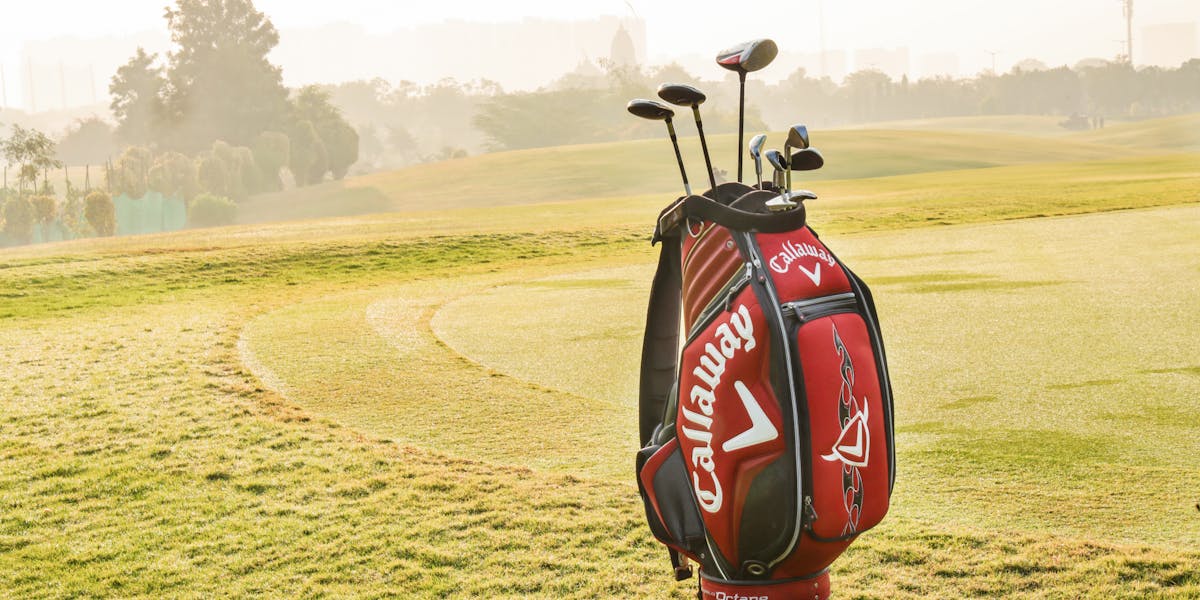
Callaway is the innovation arm of golf. They brought artificial intelligence (AI) to face design, pioneered Flash Face technology, and consistently push material and manufacturing boundaries. Callaway irons tend to be flashier, louder (audibly), and marketed more aggressively.
Forgiveness vs Workability
| Category | PING G440 | Callaway Elyte |
|---|---|---|
| Handicap range | 12-36 | 10-36 |
| MOI (moment of inertia) | Very high (perimeter weighted) | High (AI-optimized face) |
| Offset | Moderate-high | Moderate |
| Distance | Strong lofts (PW = 43°) | Strong lofts (PW = 44°) |
| Workability | Low (by design) | Low-moderate |
Both PING G-series and Callaway Elyte are game-improvement irons — designed for consistency over shot-shaping. If you're a mid-to-high handicapper, either will serve you well. For single-digit handicappers who want workability, look at PING Blueprint or Callaway Apex MB instead.
Fitting Programs
PING's fitting system is the industry gold standard. Their Color Code system (13 lie angle options from yellow to red) accounts for your height and wrist-to-floor measurement, ensuring the club sole lies flat at impact. PING also offers 8 shaft options per iron in multiple flex and weight combinations — all at no upcharge. Free custom fitting is available at any authorized PING retailer.
Callaway's fitting is excellent but less standardized. Their Ai fitting tool (online) is a solid starting point, and Callaway offers a strong network of in-person fitters. However, upcharges for premium shafts and custom specs can add $100-300 to set cost.
Price Tiers
| Tier | PING Model | Price (7-iron set) | Callaway Model | Price (7-iron set) |
|---|---|---|---|---|
| Game improvement | G440 | ~$1,100 | Elyte | ~$1,050 |
| Player's distance | i530 | ~$1,100 | Apex Pro | ~$1,200 |
| Player's blade | Blueprint S | ~$1,400 | Apex MB | ~$1,500 |
Best Models Compared
For most golfers (12-30 handicap): PING G440 vs Callaway Elyte
The G440 uses a hollow-body construction with a tungsten-infused badge for high MOI. It's the more forgiving of the two on off-center strikes. The Elyte uses AI-designed face geometry that optimizes ball speed across the entire face. In testing, they're remarkably similar performers — the G440 is slightly more forgiving; the Elyte is slightly more distance-focused.
For lower handicappers (5-12): PING i530 vs Callaway Apex Pro
Both are "players distance" irons — compact blade length with some forgiveness. The i530 has a thin face and feels exceptionally crisp. The Apex Pro has a muscle-back design with a variable face thickness for speed. If you prefer feedback (you know when you miss), the i530 is the better iron.
Feel & Sound
This is the most subjective category, and it matters. PING irons produce a lower-pitched, more muted thud at impact. Players describe it as "solid" and "buttery." Callaway irons — especially the Elyte line — are louder, with a more pronounced "crack" sound. Neither is objectively better; it's personal preference. If possible, hit both before buying.