What the Science Actually Says
The research on both foam rolling and percussion massage therapy is clear on one point: neither tool directly repairs damaged muscle tissue faster than rest alone. What both tools do effectively is reduce the perception of soreness (DOMS — delayed-onset muscle soreness) and acutely improve range of motion — both of which matter enormously for training quality in the days following a hard session.
A 2021 meta-analysis in the Journal of Sports Sciences found foam rolling reduced DOMS severity by approximately 40% when performed in the 24–72 hour window post-exercise. A separate 2023 meta-analysis on percussion therapy found similar magnitude effects (35–45% DOMS reduction) with an additional advantage in acute range of motion improvement compared to static rolling.
Foam Roller: Where It Wins
Foam rollers have three distinct advantages over percussion guns: cost (a quality roller costs $25–$50 vs $100–$400 for a massage gun), simplicity (no battery, no settings, no maintenance), and large-area coverage. Rolling the thoracic spine, IT band, calves, and quads takes 8–10 minutes of floor work that targets multiple muscle groups simultaneously.
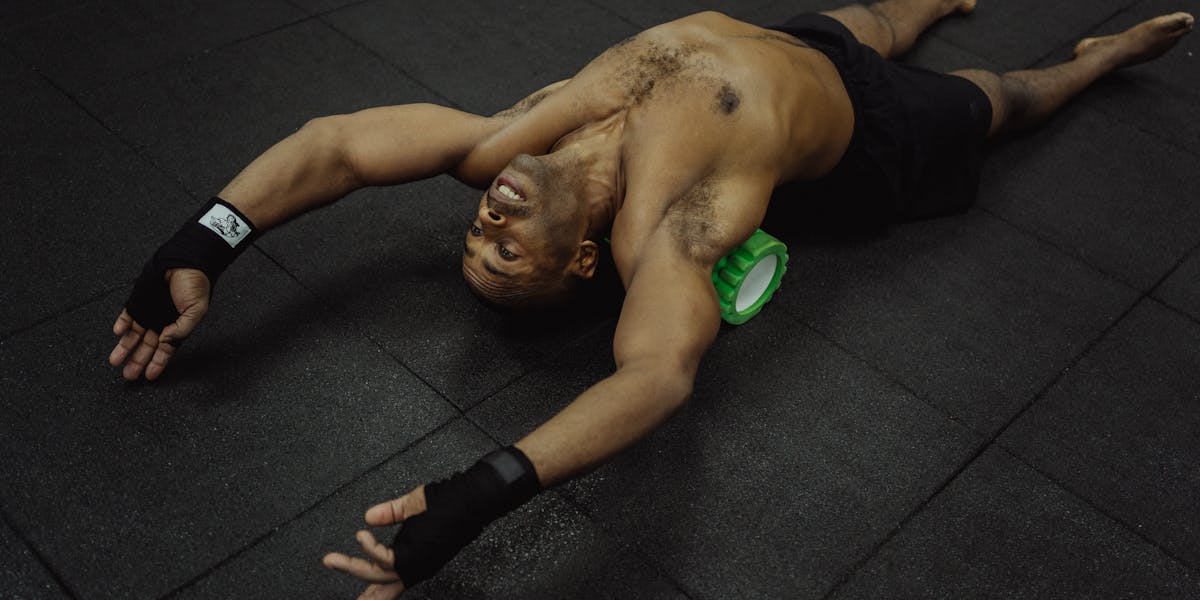
Foam rollers also enable some exercises that percussion guns cannot replicate: thoracic extension over the roller (one of the best upper-back mobility drills available), dead bug with roller, and pallof press variations using a roller for instability.
The textured or "grid" foam roller design (with raised ridges) adds point pressure on tissue, approximating a deeper fascial release. TSP recommends the smooth high-density roller for most athletes — the textured versions feel more intense but the research does not show superior outcomes over smooth high-density foam.
Massage Gun: Where It Wins
Percussion guns have three distinct advantages: precision targeting (you can work one specific muscle head rather than an entire limb), speed (2–3 minutes per muscle group vs 5–10 minutes rolling), and self-application ease (the back, upper traps, and shoulder girdle are difficult to roll effectively but accessible with a massage gun).
Theragun Prime EDITOR'S CHOICE
The Theragun Prime hits the performance sweet spot in the Theragun lineup: 16mm amplitude (deeper than entry-level guns at 10–12mm), 5 speed settings (1,750–2,400 percussions per minute), 150-minute battery life, and the proprietary QuietForce motor that significantly reduces operational noise versus previous generations. It is not cheap at ~$299, but the amplitude difference over budget massage guns is meaningful — more amplitude equals greater tissue depth, which is where clinical benefit lives.
Head-to-Head Comparison
| Factor | Foam Roller | Massage Gun |
|---|---|---|
| Recovery efficacy (DOMS) | High (~40% reduction) | High (~35-45% reduction) |
| Acute ROM improvement | Moderate | High (superior for pre-training) |
| Cost | $25–$80 | $100–$400+ |
| Time per session | 8–15 min | 2–5 min per area |
| Portability | Bulky, no battery | Compact, rechargeable |
| Back / upper trap access | Difficult | Easy (self-apply) |
| Thoracic mobility | Excellent | Not applicable |
| Precision targeting | Low | High |
| Battery required | No | Yes |
Top Picks by Budget
Power Systems Vibrating Foam Roller BEST VALUE: BOTH IN ONE
The vibrating foam roller is the best single purchase if you want one tool that captures most of the benefits of both foam rolling and percussion massage. Internal vibration motors add the percussive stimulus while you roll, combining the large-area coverage of the foam roller with the neural-override benefit of vibration. At ~$100–$150, it bridges the gap between the two categories effectively.
~$120 View on Power Systems →
The Verdict
If you can only buy one: start with a foam roller. It covers more recovery territory per dollar, requires no battery, and handles the thoracic mobility work that massage guns cannot replicate. A $30 high-density foam roller is one of the highest-ROI recovery investments available.
If you already own a foam roller and are considering a massage gun: the upgrade is worth it if you train 4+ days per week, have specific tight areas that are hard to roll (upper back, behind the shoulder), or need quick pre-session warm-up for specific muscles. The time efficiency alone justifies the purchase for high-frequency athletes.
The combined protocol — foam roll first, massage gun for specifics — is what physical therapists and elite athletic trainers use. For most recreational athletes, the foam roller handles 80% of recovery needs at 10% of the cost.
Sources & Further Reading
Reviewed May 29, 2026. Source notes emphasize current public-health guidance, product-safety notices, manufacturer specifications, and peer-reviewed research behind this guide.
- Wiewelhove T et al. — Foam Rolling Effects on DOMS: Meta-Analysis (Journal of Sports Sciences, 2021)
- Konrad A et al. — Percussion Therapy and Range of Motion (2023)
- Beardsley C, Skarabot J — Foam Rolling: A Systematic Review (Int J Sports Phys Ther, 2015)
- Theragun Clinical Research — Percussive Therapy Amplitude Study (2024)
- PMC - foam rolling performance and recovery meta-analysis
- PMC - massage gun performance and recovery systematic review
- PMC - cold-water immersion recovery systematic review
- CDC - adult physical activity guidance