Fast answer for "catcher gear sizing"
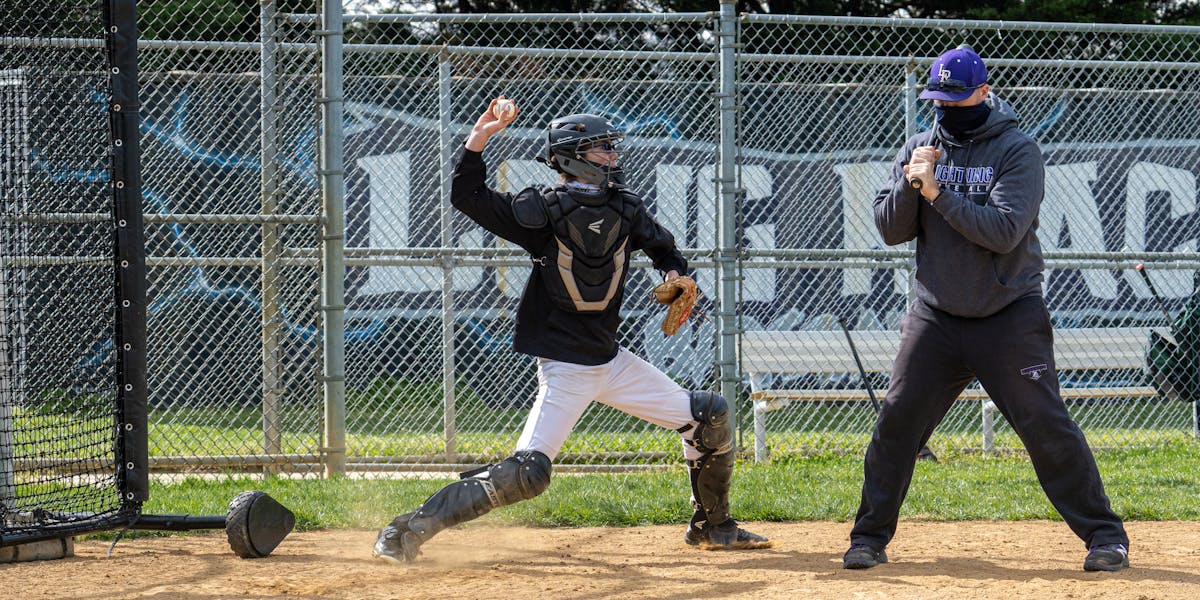
Fit the helmet and protective coverage before choosing a bundle. Catcher's helmets with attached faceguards have a NOCSAE performance standard, and chest/shin sizing should not be bought with big growing room.
| Reader | First Check | Why It Fits | Buy Zone |
|---|---|---|---|
| Helmet | Certified catcher helmet | Fit, faceguard, label, age, and league acceptance come before color. | No loose fit |
| Chest protector | Collarbone to waist coverage | Too-long protectors block crouch and throws; too-short leaves gaps. | Measure torso |
| Shin guards | Knee to ankle coverage | Guard length must protect without limiting stance or blocks. | Measure leg |
| Youth bundle | Returnable full set | Bundles can save money, but sizing across all three pieces must work. | Try on |
If you searched "catcher gear sizing chart," measure each piece separately
The page now adds a source-verified sizing path instead of sending readers straight to bundles.
Catcher's gear fit and certification path
Catcher's gear should be measured and source-checked piece by piece: helmet, chest protector, shin guards, league rules, and used-gear condition.
Catcher's gear sizing decision matrix
Use this before buying a youth bundle or used set.
Why Sizing Matters for Safety
Catching is the most dangerous position in baseball. NOCSAE (National Operating Committee on Standards for Athletic Equipment) data shows 40% of catcher injuries involve areas where gear didn't cover properly — gaps at the collarbone, exposed inner thighs, and helmets that shift on impact.
The #1 cause? Wearing gear that's the wrong size. Parents buying "room to grow" in youth equipment create exactly the coverage gaps that cause injuries. A chest protector that's too long rides up during a crouch, exposing the groin. A helmet that's too large shifts on foul tips, leaving the temple exposed.
This guide covers proper sizing for every piece of catcher's gear from T-ball through adult, with specific measurement instructions. If you're also building out your full gear set, check our youth gear checklist.
Helmet Sizing
How to Measure
Wrap a flexible tape measure around the head, 1 inch above the eyebrows, over the ears, and around the widest part of the back of the skull. This is your head circumference.
| Head Circ. | Helmet Size | Typical Age |
|---|---|---|
| 6¼" - 6⅞" | Youth/Small | 6-9 |
| 6⅞" - 7¼" | Intermediate | 9-12 |
| 7" - 7½" | Adult/Large | 13+ |
Fit Check
- Helmet should sit snug without pressure points
- No side-to-side movement when you shake your head
- Jaw pad should touch both sides of the jaw
- Vision: you should see the ball clearly in any direction without the helmet interfering
Chest Protector Sizing
How to Measure
Measure from the base of the neck to the waist (belt line). This torso length determines chest protector size.
| Torso Length | Protector Size | Typical Age |
|---|---|---|
| 12-13" | Youth (12-13") | 6-8 |
| 13-14.5" | Intermediate (14-14.5") | 9-12 |
| 15-16" | Adult (15-16") | 13-15 |
| 16-17.5" | Adult (16.5-17") | 15+ |
Fit Check
- Covers collarbone completely — the #1 area left exposed by too-short protectors
- Bottom edge reaches waist in crouch position (not just standing)
- Shoulder caps cover the deltoid
- Arms should move freely for throwing — the protector shouldn't ride up when you raise your arms
Leg Guard Sizing
How to Measure
Measure from the center of the kneecap to the ankle bone. This determines leg guard length.
| Knee-to-Ankle | Guard Size | Typical Age/Height |
|---|---|---|
| 10-12" | Youth (11-13") | Under 4'6" |
| 12-14" | Intermediate (14-14.5") | 4'6"-5'3" |
| 14-16" | Adult (15-16.5") | 5'3"-5'11" |
| 16-18" | Adult (17-18.5") | 6'+ |
Fit Check
- Knee cap should sit centered in the knee guard
- No gap between chest protector and top of leg guards in crouch
- Shin guards shouldn't slide when running — they need to stay in position
Complete Age/Size Reference Chart
| Age | Level | Helmet | Chest (length) | Legs (length) |
|---|---|---|---|---|
| 5-7 | T-Ball/Coach Pitch | Youth | 12-13" | 11-12" |
| 8-10 | Minors | Youth/Int. | 13-14" | 13-14" |
| 11-12 | Majors | Intermediate | 14-15" | 14-15" |
| 13-15 | Middle/JV | Adult | 15-16" | 15-16.5" |
| 16+ | Varsity/Adult | Adult | 16-17" | 16.5-18" |
Top Catcher's Gear Sets
Best Youth Sets
Best Intermediate/Adult
For the complete beginner equipment list, see our youth gear checklist and position-specific glove guide.
Sources & Further Reading
Reviewed June 18, 2026. Source notes emphasize protective equipment, catcher helmet standards, youth equipment inspection, and NOCSAE/CDC safety guidance.