Ball Carts and Storage
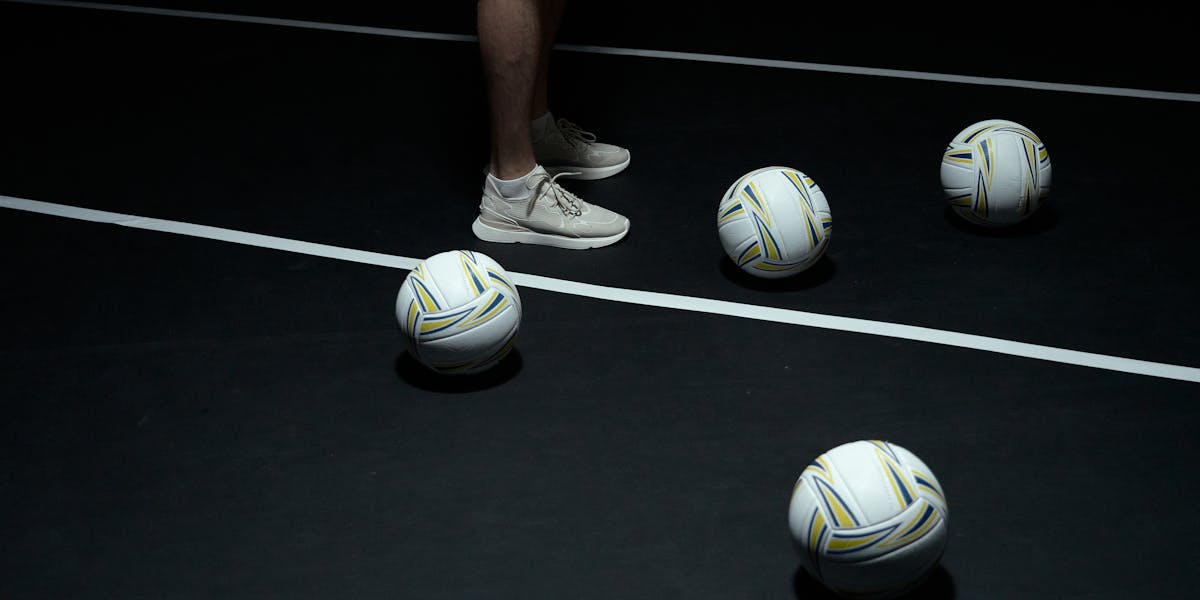
Ball carts are the foundation of high-volume team practice. A well-organized cart allows coaches to run continuous reps without pausing to chase balls, which can double the effective number of contacts per practice. For team use, look for carts that hold at least 30–60 balls, roll smoothly on hardwood, and have a cover to keep balls from scattering when bumped.
For individual or small-group training, a simple ball bag that holds 6–12 balls is sufficient. Mesh bags with shoulder straps work well for personal use and beach training.
Volleyball Rebounders
Rebounders are angled nets that return the ball after you pass or hit it, enabling solo passing and setting reps without a partner. They're one of the highest-value training investments for individual players who want to increase contact volume outside of team practice.
The Tachikara Volleyball Rebounder is the most widely used model at the club and high school level. It folds for easy transport, has adjustable angle settings for passing or setting, and is durable enough for gym floor use. Expect to pay $100–$180 for a quality rebounder.
Limitations: rebounders are excellent for passing and forearm contact reps but have limited use for spiking or jump serving practice. For hitting work, a spike trainer or partner is more effective.
Volleyball Serving Machines
Ball machines for volleyball allow passers to train with consistent, repetitive serves at controlled speeds and trajectories — the same benefit pitching machines provide baseball hitters. The JUGS Volleyball Machine is the industry standard at the club and collegiate level.
JUGS machines can be programmed for float serves, topspin serves, and jump serves at variable speeds, giving passers realistic training without needing a consistent human server. At $1,200–$1,500, they're a significant investment suited for team budgets. For individual use, a rebounder plus a partner is more cost-effective.
Budget alternative: if your budget is under $300, look at manual ball chute systems that a coach or assistant can load. These don't replicate machine consistency but cost significantly less and serve as useful conditioning tools.
Spike Trainers and Arm Swing Aids
Spike trainers are overhead suspended ball systems that allow hitters to practice approach mechanics, arm swing, and contact angle without needing a setter or full team setup. They typically consist of an adjustable vertical pole with a rope-suspended ball at the correct hitting height.
The most effective spike trainers allow you to set the ball height between 8' and 10'6" to accommodate different heights and net positions. Good for warming up the arm swing pattern and training the specific contact angle for line versus cross-court shots.
Limitations: suspended ball trainers don't replicate the timing element of a real set. Use them as a warm-up or form-drilling supplement, not a replacement for partner or machine-fed hitting practice.
Passing Training Aids
Passing is the most-trained skill in volleyball and has the most variety in available training tools:
- Platform Training Bands: Elastic bands worn around the forearms that train proper platform alignment. They provide tactile feedback when the arms are misaligned. Good for youth players learning the basics. Under $30.
- Weighted Volleyballs: Heavier training balls (18–20 oz vs. the standard 9.2 oz) develop passing arm strength. Use for warm-up and conditioning, not for full technique work. Available in sets for under $40.
- Target Nets: Target nets mounted to the net standard or wall allow passers to track pass accuracy. Excellent for individual and team practice accountability.
Setting Training Aids
Setters have fewer dedicated training tools than passers, but a few are worth using:
- Setting Target on Net: A target attached to the net cord at zone 2/4 gives setters immediate visual feedback on set location. Excellent for solo wall-setting drills where you aim for a target location.
- Volleyball Wall Training: Simply setting against a wall repeatedly at 8'+ height is one of the highest-value solo setting drills available. No equipment needed beyond a ball and a gym wall.
- Rebounder for Setting: At a shallow angle, a standard volleyball rebounder can return sets for solo setting reps. Adjust angle to approximately 20–30 degrees from vertical.
Training Gear by Level
The right training investments depend on your level and context:
- Youth (U14): Rebounder, passing arm bands, standard ball bag. Total: $150–$200.
- Club/High School: Rebounder, spike trainer, ball cart for team, weighted balls. Total: $300–$450.
- College/Club Program: JUGS machine, full ball cart set (3+), target systems, video analysis tools. Total: $3,000+.
Sources & Further Reading
Reviewed May 29, 2026. Source notes emphasize official volleyball rules, training context, and physical activity guidance for conditioning work.