Fast answer for "pitching machine buyer guide"
Start with ball type and player level. Lite-ball machines are safer and cheaper for backyard reps; real-ball wheel machines need space, a screen, supervision, and a realistic speed range.
| Reader | First Check | Why It Fits | Buy Zone |
|---|---|---|---|
| Backyard youth | Lite-ball machine | Lower cost and lower fear factor for swing reps. | Use safe balls |
| Team batting practice | One/two-wheel real-ball machine | Better for consistent strike-zone reps and coach control. | Add screen |
| Advanced hitters | Two/three-wheel machine | Pitch mix, speed, and movement matter when timing is the goal. | Check warranty |
| Baseball + softball | Combo setup | Chutes, legs, release height, and ball compatibility decide versatility. | Verify conversion |
If you searched "best pitching machine," choose ball type and training level first
The page now routes machine searches through skill level, ball compatibility, speed, pitch mix, safety, and official support paths.
Pitching machine source and safety path
Pitching machines should match ball type, speed range, training goal, supervision, safety screen, and support path.
Pitching machine decision matrix
Use this before sorting by top speed.
Pitching Machine Types Explained
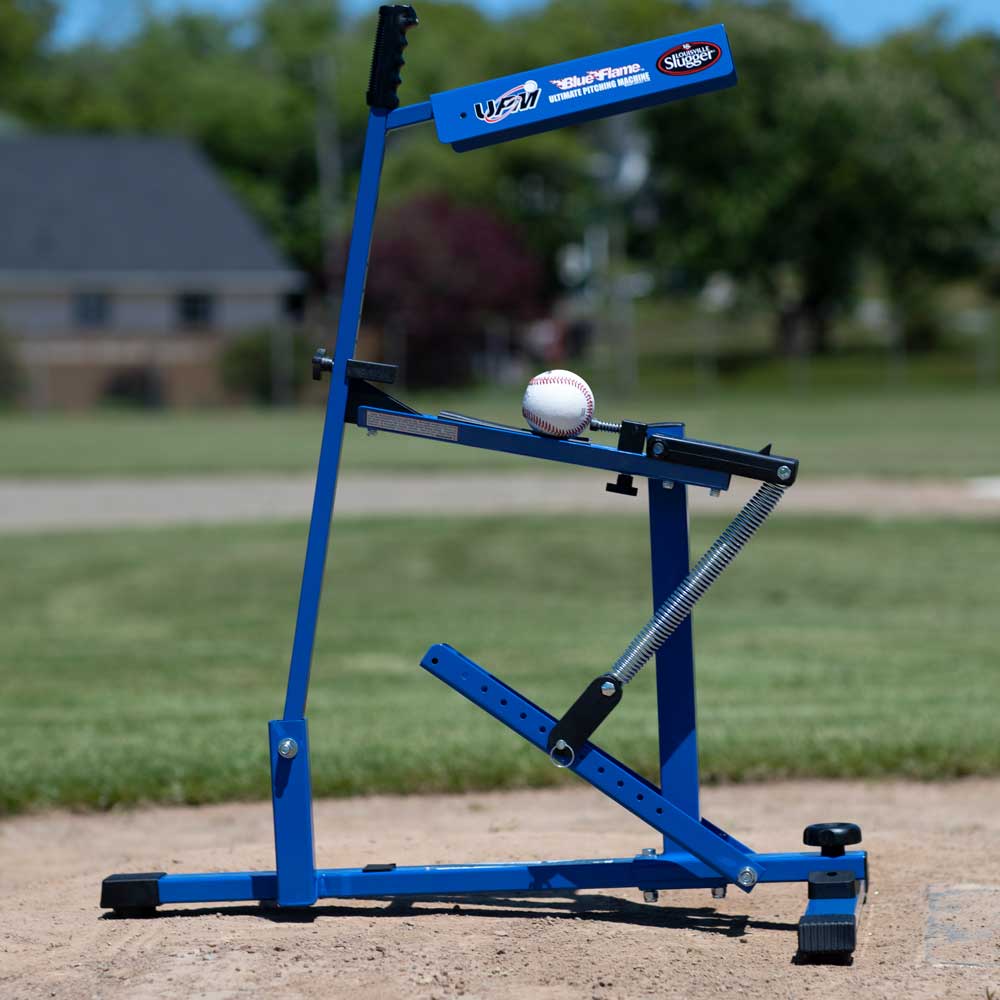
Arm-Style Machines (e.g., JUGS Lite-Flite, Louisville Slugger Blue Flame)
A mechanical arm swings forward and releases the ball, mimicking a pitcher's motion. The biggest advantage: hitters can see the "arm" come forward, which develops timing better than wheel machines where the ball appears suddenly.
- Speed range: 18-70 mph (varies by model)
- Pitch types: Mostly fastballs; some models do curves
- Accuracy: Good — consistent release point
- Best for: Youth development, timing training
- Price: $150-$1,500
Wheel Machines (Single and Dual)
One or two spinning wheels grip and launch the ball. Single-wheel machines throw fastballs and changeups. Dual-wheel machines can throw breaking balls by spinning wheels at different speeds.
Single Wheel
- Speed range: 15-75 mph
- Pitch types: Fastballs, changeups
- Price: $400-$1,200
Dual Wheel (e.g., JUGS Curveball, Hack Attack)
- Speed range: 25-100+ mph
- Pitch types: Fastballs, curves, sliders, changeups, cutters
- Price: $1,200-$4,000+
Compressed Air (e.g., Zooka ZS740)
Uses compressed air to launch balls. Extremely portable, battery-powered, near-silent operation. No spinning wheels or moving parts to maintain.
- Speed range: 10-70 mph
- Pitch types: Mostly straight; limited breaking ball ability
- Price: $600-$1,200
- Best for: Portability, backyard use, quiet neighborhoods
Feature Comparison
| Feature | Arm-Style | Single Wheel | Dual Wheel | Compressed Air |
|---|---|---|---|---|
| Max Speed | ~70 mph | ~75 mph | 100+ mph | ~70 mph |
| Breaking Balls | Limited | No | Yes ✓ | Limited |
| Visible Delivery | Yes ✓ | No | No | No |
| Portability | Moderate | Low | Low | Excellent |
| Noise Level | Moderate | Loud | Loud | Quiet |
| Maintenance | Low | Moderate | Moderate | Low |
| Price Range | $150-$1,500 | $400-$1,200 | $1,200-$4,000 | $600-$1,200 |
Speed Ranges by Player Level
| Level | Age | Recommended Speed Range |
|---|---|---|
| T-Ball/Coach Pitch | 5-7 | 25-35 mph |
| Kid Pitch Minors | 8-10 | 35-50 mph |
| Majors/Travel | 11-12 | 45-65 mph |
| Middle School | 13-14 | 55-75 mph |
| High School | 14-18 | 65-85 mph |
| College/Adult | 18+ | 75-95+ mph |
Buy a machine that covers your current speed PLUS 15-20 mph above for growth. A player at 50 mph should get a machine that reaches 70 mph minimum.
Setup and Space Requirements
- Minimum distance: 30-60 feet from machine to batter (varies by speed)
- Backstop/net: Essential. Budget $100-$300 for a quality batting cage net
- Power: Most wheel machines need 110V outlet. Compressed air and some arm machines are battery/manual
- Surface: Level ground. Grass or artificial turf works. Concrete can damage balls
Top Recommendations
Best for Youth (Under $500)
Best All-Around ($500-$1,500)
Best for Serious Training ($1,500+)
Pair your machine with quality broken-in gloves and properly weighted bats.
Sources & Further Reading
Reviewed June 18, 2026. Source notes emphasize baseball and softball equipment rules, bat standards, safety inspection, and governing-body resources.