×
Sports
Fitness & Outdoors
Content
Pickleball · Ball Analysis · Report #TSP-PB-001

Indoor vs Outdoor Pickleballs: Why They're Different and Which Balls Your League Uses

Indoor and outdoor pickleballs are fundamentally different — different plastic, different holes, different weight, different flight. Using the wrong one ruins the game. Here's the complete breakdown.

A woman engaging in pickleball on an indoor court, showcasing athletic skill and f...

They Are NOT Interchangeable

This catches every new pickleball player off guard: indoor and outdoor pickleballs are completely different products. They use different plastic, have different numbers of holes, weigh different amounts, and fly through the air differently. Using an outdoor ball indoors (or vice versa) doesn't just feel wrong — it fundamentally changes the game's pace, bounce, and strategy.

USA Pickleball (the sport's national governing body) specifies ball standards in their official rulebook. Any ball used in sanctioned play must be on the USA Pickleball Approved Ball List, and balls are categorized by intended surface. Let's break down exactly what makes them different.

Outdoor Pickleballs: Built for Wind and Hard Surfaces

Construction:

  • 40 smaller holes drilled through the ball (precise, round holes)
  • Harder, heavier plastic — typically 0.9-1.0 oz (USA Pickleball allows 0.78-0.935 oz, but most outdoor balls are at the heavier end)
  • Smoother surface with a harder shell
  • Seamless or single-piece molding — more consistent flight

Playing characteristics:

  • Faster. The harder plastic and smaller holes create a ball that travels faster and lower through the air
  • Less affected by wind. The 40-hole design with smaller openings resists wind drift better than indoor balls
  • Bounces higher on hard surfaces (concrete, asphalt)
  • Cracks rather than going soft. Outdoor balls eventually develop cracks from repeated impact on hard surfaces. When they crack, they fly erratically and must be replaced.
  • Less spin-responsive. The smooth, hard surface generates less friction with the paddle face

Best Outdoor Pickleballs

Franklin X-40 Outdoor Pickleball — The official ball of USA Pickleball Championships and most major outdoor tournaments. The benchmark outdoor ball. Consistent flight, durable, predictable bounce.
~$18/12-pack Check Price on Amazon
Program: Amazon Associates / Franklin Direct (5%)
Dura Fast 40 Outdoor Pickleball — Used in PPA Tour events. Slightly firmer than the X-40 with a faster game pace. Known for consistent roundness but cracks relatively quickly in cold weather.
~$25/12-pack Check Price on Amazon
Program: Amazon Associates / PickleballCentral (6%)
ONIX Pure 2 Outdoor — True-flight technology for consistent bounce. Less prone to cracking than some competitors. Good balance of speed and durability.
~$20/12-pack Check Price on Amazon
Program: Amazon Associates

Indoor Pickleballs: Built for Gym Floors and Control

Construction:

  • 26 larger holes — bigger openings create more air resistance
  • Softer, lighter plastic — typically 0.8-0.9 oz
  • Textured surface — slightly rougher than outdoor balls
  • Two-piece construction (some models) — may have a visible seam

Playing characteristics:

  • Slower. The larger holes create more drag, slowing the ball
  • Lower bounce on gym floors and smooth indoor surfaces
  • More spin-responsive. The softer plastic and textured surface grip the paddle face better
  • Quieter. Softer plastic produces less noise on impact — important for shared gym spaces and noise-sensitive venues
  • Goes soft rather than cracking. Indoor balls eventually lose their rigidity and become mushy. When they're soft, they don't bounce properly and should be replaced.
  • More affected by HVAC. Lighter weight means air conditioning drafts can influence flight paths in large gyms

Best Indoor Pickleballs

ONIX Fuse Indoor Pickleball — The most widely used indoor ball. Consistent bounce on wood and sport-court gym floors. Official ball of many indoor leagues.
~$15/6-pack Check Price on Amazon
Program: Amazon Associates / PickleballCentral
Jugs Indoor Pickleball — Slightly softer than the Fuse, excellent for recreational play. Very durable for an indoor ball — lasts longer before going soft.
~$18/12-pack Check Price on Amazon
Program: Amazon Associates
Franklin X-26 Indoor Pickleball — The indoor counterpart to the X-40. 26 holes, softer plastic. Used in many indoor tournament settings.
~$12/6-pack Check Price on Amazon
Program: Amazon Associates / Franklin Direct

Side-by-Side Comparison

FeatureOutdoor BallIndoor Ball
Number of holes4026
Hole sizeSmallerLarger
WeightHeavier (0.9-1.0 oz)Lighter (0.8-0.9 oz)
Plastic hardnessHardSoft
SpeedFasterSlower
BounceHigherLower
Spin responseLowerHigher
Wind resistanceBetter (less affected)Worse (more affected)
Noise levelLouderQuieter
Failure modeCracksGoes soft
Average lifespan3-10 games (competition)5-15 games (competition)
SurfaceConcrete, asphalt, sport courtWood gym floor, indoor sport court

Which Ball Does Your League Use?

Most leagues and facilities standardize on a specific ball. Always check with your league before buying in bulk. Here's what the major organizations and tournament circuits use:

  • USA Pickleball National Championships: Franklin X-40 (outdoor), Franklin X-26 (indoor)
  • PPA Tour: Dura Fast 40 (outdoor), ONIX Fuse (indoor)
  • MLP (Major League Pickleball): Franklin X-40
  • Most YMCA/community center leagues: ONIX Fuse or Jugs (indoor)
  • Most outdoor public courts: Franklin X-40 or Dura Fast 40
💡 Bring Both: If you play at mixed venues, keep a bag of each type. Indoor balls are useless outdoors (too light, too slow, affected by any breeze). Outdoor balls indoors are too fast and too bouncy on gym floors, making the game feel out of control.

Temperature and Ball Performance

Temperature significantly affects pickleball behavior, especially outdoor balls:

  • Cold weather (below 50°F): Outdoor balls become brittle and crack much faster — sometimes mid-rally. The plastic stiffens, reducing bounce and increasing the risk of splitting. Bring extra balls in cold weather. The Dura Fast 40 is particularly prone to cold-weather cracking.
  • Hot weather (above 90°F): Balls become slightly softer and bouncier. Less impact on gameplay but they wear out faster.
  • Tip: Keep spare outdoor balls in your pocket or a warm bag in cold weather. A warm ball performs better and lasts longer than one that's been sitting on cold concrete.

How Many Balls to Buy

Pickleballs are consumable — they wear out. Here's a realistic buying guide:

Playing FrequencyMonthly Ball ConsumptionRecommended Purchase
Casual (1-2x/week)3-6 balls/month12-pack every 2-3 months
Regular (3-4x/week)6-12 balls/month12-pack monthly
Competitive (5+/week)12-24 balls/month24-48 pack monthly

Buying in bulk (24-48 packs) saves 15-25% per ball.
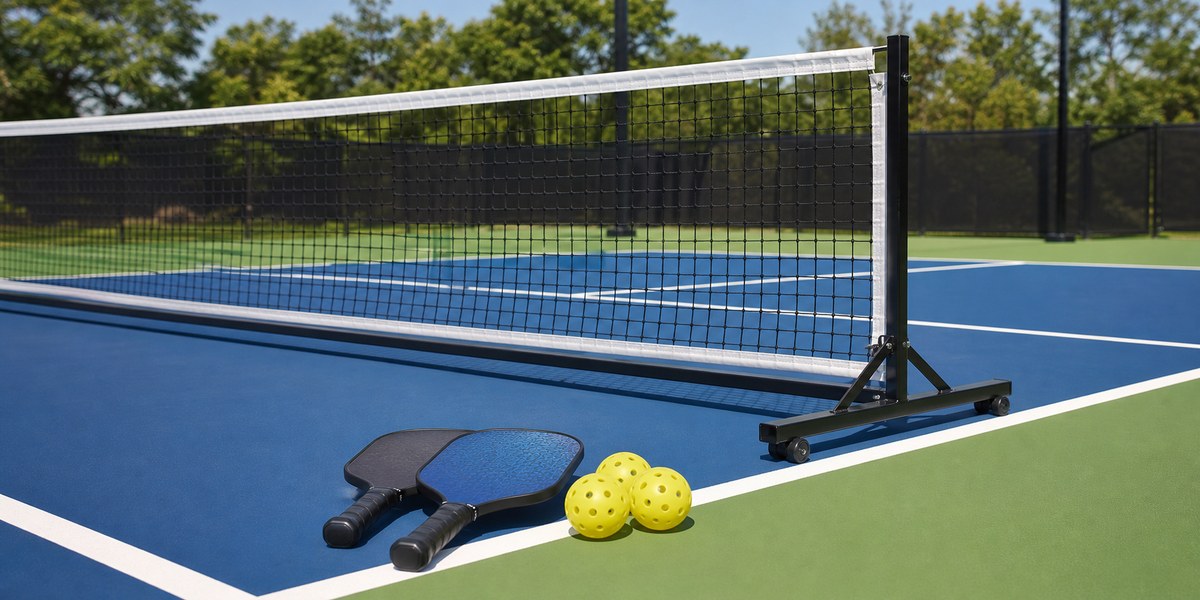
Franklin X-40 Outdoor Bulk Pack (48 balls) — The best value for regular outdoor players. Same ball used in national championships.
~$65/48-pack (~$1.35/ball) Check Price on Amazon
Program: Amazon Associates / Franklin Direct

Common Mistakes

Mistake #1: Using outdoor balls indoors. They're too fast, too bouncy on wood floors, and too loud for shared gym spaces. Many indoor facilities explicitly ban outdoor balls for noise reasons alone.
Mistake #2: Playing with cracked/soft balls. A cracked outdoor ball or a soft indoor ball flies unpredictably. Replacing balls is cheap — playing with bad balls builds bad habits because the ball does random things.
Mistake #3: Buying non-approved balls for league play. If you play in USA Pickleball-sanctioned events, the ball must be on the approved list. No-name balls from Amazon might be fine for recreational rallying but won't be accepted in tournament play.
INDOOR vs OUTDOOR PICKLEBALLS INDOOR 26 larger holes Softer plastic Lighter weight (~0.8 oz) Less bounce, slower play Best: Onix Fuse Indoor OUTDOOR 40 smaller holes Harder plastic Heavier weight (~0.9 oz) More bounce, faster play Best: Franklin X-40

Sources & Further Reading

  1. USA Pickleball. "Official Rulebook — Ball Specifications." usapickleball.org
  2. USA Pickleball. "Approved Ball List." usapickleball.org
  3. The Dink. "Best Pickleballs 2025: Indoor and Outdoor Tested." thedinkpickleball.com
  4. Pickleball Kitchen. "Indoor vs Outdoor Pickleballs Guide." pickleballkitchen.com, 2024.
  5. Franklin Sports. "X-40 and X-26 Ball Specifications." franklinsports.com
  6. Pickleball Effect. "Ball Comparison Testing." YouTube, 2024.

Frequently Asked Questions

What is the difference between indoor and outdoor pickleballs?

Indoor balls have 26 larger holes, are softer, and fly slower. Outdoor balls have 40 smaller holes, are harder, and handle wind better. Indoor balls last longer but crack less dramatically. Outdoor balls crack and go out-of-round faster in cold weather.

Can I use outdoor pickleballs indoors?

You can, but they play differently — harder, faster, and louder. Most organized indoor play requires indoor balls. For casual play, it works in a pinch. Using indoor balls outdoors is not recommended as wind makes them unpredictable.

How long do pickleballs last?

Indoor balls: 5-10 games before losing bounce. Outdoor balls: 3-8 games in warm weather, fewer in cold. Look for cracks, soft spots, and lopsided bounce. Tournament players go through 2-3 balls per match. Keep spares in your bag.

More from Pickleball

All Pickleball →
Pickleball Court Shoes vs Tennis Shoes
Pickleball

Pickleball Court Shoes vs Tennis Shoes

Short answer: yes, mostly.

9 min read
Pickleball Paddle Face Materials: Carbon Fiber vs Fiberglass vs Composite
Pickleball

Pickleball Paddle Face Materials: Carbon Fiber vs Fiberglass vs Composite

Face material is the single biggest factor in how a paddle plays.

10 min read
Pickleball Paddle Weight Guide: Light vs Heavy
Pickleball

Pickleball Paddle Weight Guide: Light vs Heavy

Paddle weight affects power, control, and elbow health.

9 min read

Equipment Intel, Weekly

New analysis, test results, and gear science — delivered to your inbox.