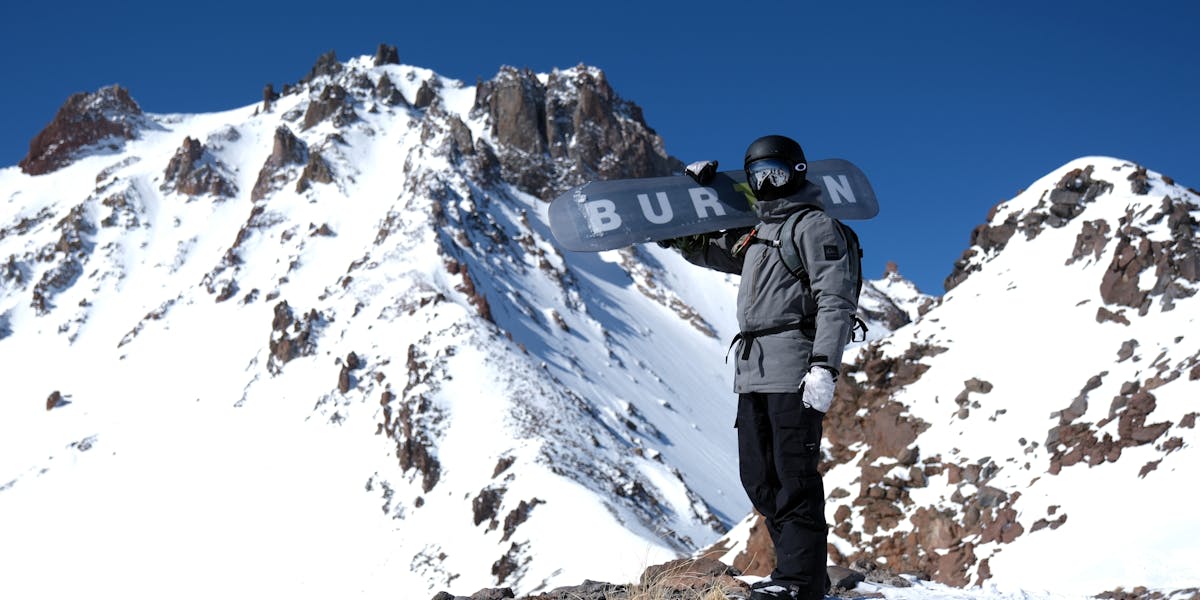
Two Snowboard Giants
Burton is one of the most influential snowboard brands. Founded by Jake Burton Carpenter in 1977, Burton helped define the modern snowboard industry. They make boards for every rider from beginner to pro, and The Channel mounting system gives riders fine stance adjustment when paired with compatible discs or EST bindings.
Lib Tech (Mervin Manufacturing, Washington State) is the engineering iconoclast. Founded by Mike Olson in 1977 as well, Lib Tech pioneered environmentally-responsible snowboard manufacturing and patented Magnetraction — the serrated edge technology that revolutionizes edge grip on hard snow and ice.
Construction Technology
Burton's key technologies:
- Flat Top / Flying V / DirectionalFlat: Burton's proprietary rocker/camber profiles. Flying V (alternating rocker and camber zones) is their most popular for all-mountain riding.
- Squeezebox Core: Varying core thickness zones that add flex without reducing pop.
- Frostbite Edges: Extended edge contact in the tip and tail for edge hold on hardpack (their answer to Magnetraction).
- Dragonfly Core: Basswood/poplar blend with carbon rods for lightweight pop.
Lib Tech's key technologies:
- Magnetraction (MagneTraction): 7-point serrated edges designed to increase contact points and edge hold on firm or icy snow. Especially relevant for east coast, midwest, and spring hardpack riders.
- C2 Camber: Lib Tech's unique camber profile with rocker between the feet and camber under the bindings — balanced pop and float.
- UHMW Sidewalls: Ultra-high molecular weight polyethylene for durability and vibration dampening.
- Eco-sublimated topsheets: Water-based inks, no PVC.
By Riding Style
| Riding Style | Burton Pick | Lib Tech Pick |
|---|---|---|
| All-mountain (beginner) | Burton Instigator | Lib Tech Skunk Ape |
| All-mountain (intermediate) | Burton Custom | Lib Tech Travis Rice Pro |
| Freestyle/park | Burton Process | Lib Tech Box Scratcher |
| Powder/freeride | Burton Family Tree | Lib Tech Orca |
| East coast/ice | Burton Custom Flying V | Lib Tech TRS (any Magnetraction) |
Eco & Sustainability
Lib Tech's parent company, Mervin Manufacturing, emphasizes U.S. production in Sequim, Washington along with lower-impact materials and processes such as water-based resins, recycled inputs, and bio-resin options. If sustainability matters to your purchase decision, compare the current claims and materials on the exact model you are considering.
Burton has made significant sustainability commitments through their CarbonNeutral product program and Bluesign-certified materials, but their manufacturing is global and less vertically integrated than Mervin.
Price Comparison
| Category | Burton | Price | Lib Tech | Price |
|---|---|---|---|---|
| Entry-level | Instigator | ~$350 | Skunk Ape | ~$400 |
| Mid-range | Custom | ~$550 | Travis Rice Pro | ~$680 |
| Premium | Family Tree Pow | ~$750 | Orca | ~$700 |
Lib Tech often prices above comparable mass-market boards in similar categories, partly because of U.S. manufacturing and proprietary construction. Burton usually offers a wider spread of price points, which can help budget-conscious buyers.
Best Models
Burton Custom is a long-running all-mountain benchmark. Its twin-like shape and available camber profiles make it a strong do-everything option for riders who want one board to progress on across groomers, side hits, and occasional park laps.
Lib Tech Travis Rice Pro is a well-known advanced all-mountain/freeride board. Its blunt nose/tail, C2 profile, and Magne-Traction edge are built for riders who want firm-snow hold plus enough float and stability for variable terrain.
Which Brand for You?
Sources & Further Reading
Sources & Further Reading
Reviewed May 29, 2026. Source notes emphasize snow-sport safety guidance, winter-travel planning, helmet and binding standards, avalanche education, and discipline-specific governing resources.