Board Shape Overview
Snowboard design has become more specialized over the decades. The broadest division: freestyle vs freeride. Freestyle boards are optimized for tricks, park features, and urban riding. Freeride boards are optimized for powder, big mountains, and high-speed natural terrain. All-mountain boards sit in between, trading some performance at each extreme for versatility.
The right board depends on three things: where you primarily ride (resort groomed, park, powder, backcountry), your current skill level, and where you want your riding to go over the next 1–3 seasons.
Freestyle Snowboards
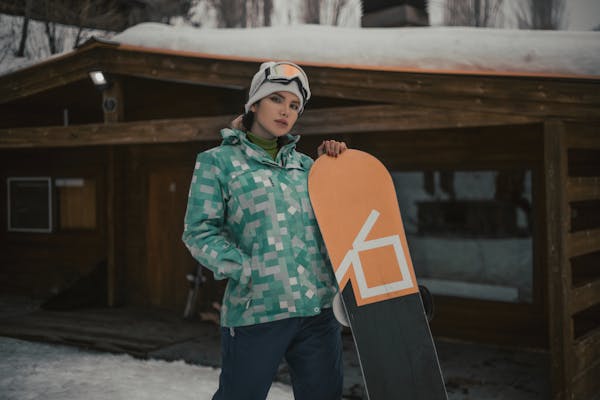
Freestyle boards are designed for riders who spend time in terrain parks, urban setups, and anyone prioritizing tricks, presses, butters, and spin landings over high-speed carving or powder float.
Twin-tip shape: identical nose and tail geometry. Rides the same in both directions — essential for jibbing, rail slides, and switch riding.
Soft flex (2–5/10): easier to press, butter, and pop. More forgiving on imperfect landings. Tradeoff: lacks rigidity at high velocity.
Rocker or hybrid camber: most freestyle boards use some form of rocker or flat/rocker hybrid. Rocker reduces edge catch risk, adds playful feel for buttering, and improves float in light powder.
Shorter length: ridden 3–6 cm shorter than all-mountain recommendations. Shorter boards are easier to spin, more maneuverable in tight park lines.
Who should choose freestyle: riders who spend 80%+ time in terrain parks or urban spots. Soft flex and twin geometry make tricks more accessible and progression faster.
Freeride Snowboards
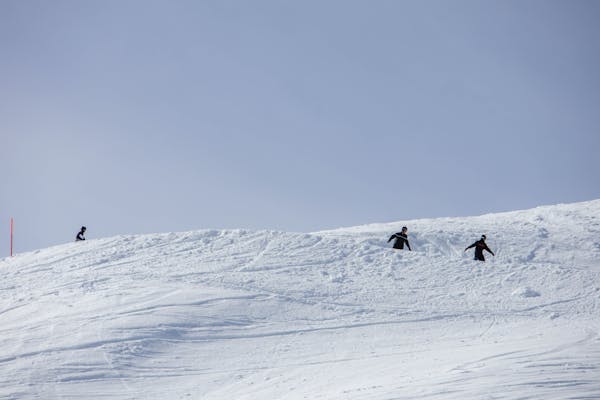
Freeride boards are built for riders who want to go fast, charge big lines, surf powder, and explore the mountain beyond marked runs. They prioritize float in soft snow, stability at speed, and directional performance.
Directional shape: the nose is wider, longer, and more tapered than the tail. This creates natural float in powder and directional stability at speed. Can be ridden switch in short sections, but it is not optimized for extended switch riding.
Directional twin: a variant with twin-like shape but slightly set-back stance and mild taper. Rides switch reasonably well while still floating in powder. The most versatile freeride option.
Stiff flex (6–9/10): holds edge at high speed, resists chatter on variable terrain, transmits power efficiently during aggressive carving. Reduced playfulness — does not butter or press easily.
Camber or hybrid camber: traditional camber generally provides strong edge hold and pop, often combined with early rise at tip and tail for powder float.
Who should choose freeride: intermediate to advanced riders who spend the majority of time off groomed runs — in powder, trees, steep natural terrain, or backcountry.
All-Mountain Boards
All-mountain boards handle every condition competently without excelling at any extreme. Designed for riders who want one board for groomers, occasional park, powder days, and everything in between.
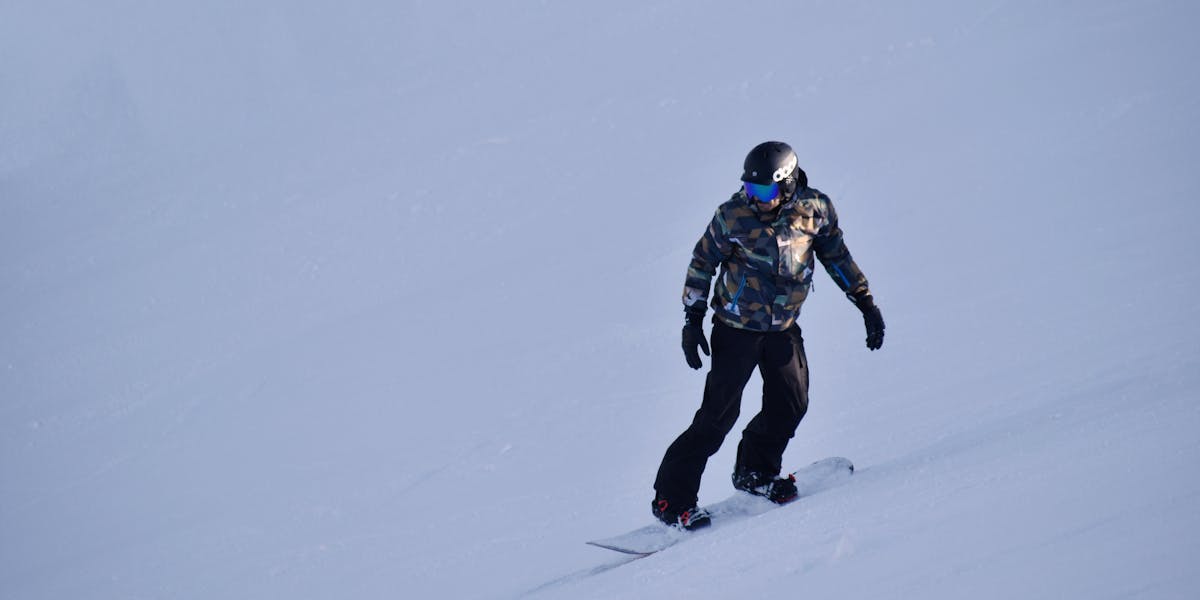
Typical specs: directional twin or mild directional shape, medium flex (4–6), hybrid camber profile. Rides switch acceptably, handles moderate park features, floats in light powder, carves groomers with reasonable authority.
For intermediate riders still building their riding style, an all-mountain board is often the best investment. Once you know what terrain excites you most, a more specialized board rewards the commitment.
Camber Profiles Explained
| Profile | Shape | Character | Best For |
|---|---|---|---|
| Traditional Camber | Arched up at center | Maximum edge hold, powerful pop, catch risk | Carving, aggressive freeride |
| Flat | Completely flat | Low catch risk, neutral feel, moderate pop | Beginners, jibbing |
| Rocker | Arches up at tip and tail | Loose feel, early release, excellent float | Deep powder, park |
| Hybrid Camber | Camber between feet, rocker at tips | Balanced edge hold with float and forgiveness | All-mountain |
| Hybrid Rocker | Rocker between feet, flat at tips | Loose and playful with some stability | Park, powder-focused |
Flex Ratings Explained
Snowboard flex is rated 1–10 (1=soft noodle, 10=race stiff):
- 1–3 (Soft): forgiving, easy to press and butter, best for beginners and park riders. Lacks speed stability on hardpack.
- 4–6 (Medium): balanced for all-mountain riding. Responsive without being punishing. Best range for most recreational riders.
- 7–8 (Stiff): powerful and precise at speed. Rewards advanced technique. Punishing on imperfect landings.
- 9–10 (Very Stiff): racing or extreme freeride territory. Very unforgiving.
Flex interacts with body weight: a 130-pound rider on a flex-6 board will experience it as stiffer than a 200-pound rider on the same board.
How to Choose: Decision Framework
1. Where do you spend most of your time? More than 50% park? Go freestyle. More than 50% off-piste or powder? Go freeride. Mixed? Go all-mountain with a lean toward your dominant terrain.
2. What is your skill level? Beginner/early intermediate: softer flex, forgiving profile. Intermediate: medium flex, hybrid camber. Advanced: match stiffness to terrain specialization.
3. Do you care about switch riding? Yes: twin or directional twin. No: directional shape for your terrain focus.
If uncertain, demo boards before buying. Most resort rental shops offer demo programs ($30–50 per day) to test different shapes and flex ratings before committing.
Top freestyle and freeride boards for every skill level.
Sources & Further Reading
Sources & Further Reading
Reviewed May 29, 2026. Source notes emphasize snow-sport safety guidance, winter-travel planning, helmet and binding standards, avalanche education, and discipline-specific governing resources.