Fast answer for "ice climbing gear list for beginners"
Beginners should prioritize instruction and compatibility, not a full rack of expensive tools on day one. Many first outings should rent or use guide-provided technical gear.
| Reader | First Check | Why It Fits | Buy Zone |
|---|---|---|---|
| First day/course | Guide-provided or rented technical kit | A guide can match route, tools, crampons, rope, and protection to conditions. | Rent before buying |
| Personal essentials | Helmet, harness, boots, gloves, layers | Fit, warmth, and PPE condition are easier to own and verify than borrowed basics. | Buy carefully |
| Crampons | Boot-compatible steel crampons | Binding type must match boot welts and route style. | Verify with boot in hand |
| Ice tools | Terrain-matched pair | Water ice, alpine ice, and mixed climbing need different pick, shaft, and grip choices. | Try before buying |
| Protection | Sharp ice screws and dry-treated rope | Placement quality, inspection, and rope system should be taught by qualified instruction. | Do not buy mystery used |
Beginner ice climbing gear list: rent first, buy after fit is proven
For a first top-rope ice day, the safest path is usually a guided course or local ice park clinic with technical gear provided. Buy personal fit and warmth items first; delay ice tools, crampons, screws, and ropes until an instructor has checked boot compatibility, route style, and your actual goals.
If you searched "ice climbing gear list for beginners," start with training and compatibility
The page now separates personal kit, rented/guide gear, technical gear, and standards checks so beginners do not overbuy or buy incompatible equipment.
Ice climbing safety and compatibility retailer option
Technical ice gear is safety equipment. Verify standards, compatibility, instruction, condition, and route use before buying.
Ice climbing gear decision matrix
Use this before buying a first ice climbing setup.
Overview & Critical Safety Note
Ice climbing is a high-consequence activity. Gear failures, improper technique, and falling ice can cause serious injury or death. Before purchasing any gear, take a guided Introduction to Ice Climbing course. The American Mountain Guides Association (AMGA) and local guide services run excellent intro clinics that include gear rental — you can try the sport before spending $1,500+ on a starter kit.
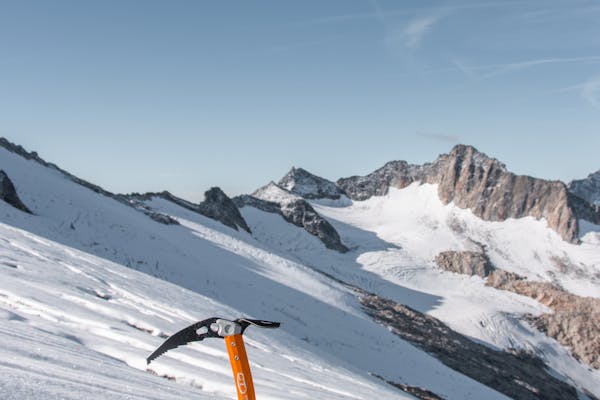
Ice Axes
Technical ice climbing uses two axes — one per hand. Unlike mountaineering axes (single, straight shaft), ice climbing axes are aggressive and curved to allow hooking into near-vertical ice without your hand hitting the wall.
Key specs to understand:
- Shaft angle: More droop = works on more vertical ice. Beginners should start with moderate droop (~55–65° pick angle)
- Pick geometry: Steep picks (more curved) grip ice better on overhanging terrain. Standard picks are more versatile for WI2–WI4.
- Weight: Lighter axes reduce forearm pump. But don't sacrifice durability — heavy is better than breaking.
- Leashless vs leash: Modern ice climbing is almost entirely leashless (axes clipped to harness via tool leashes). Allows hand switches without dropping tools.
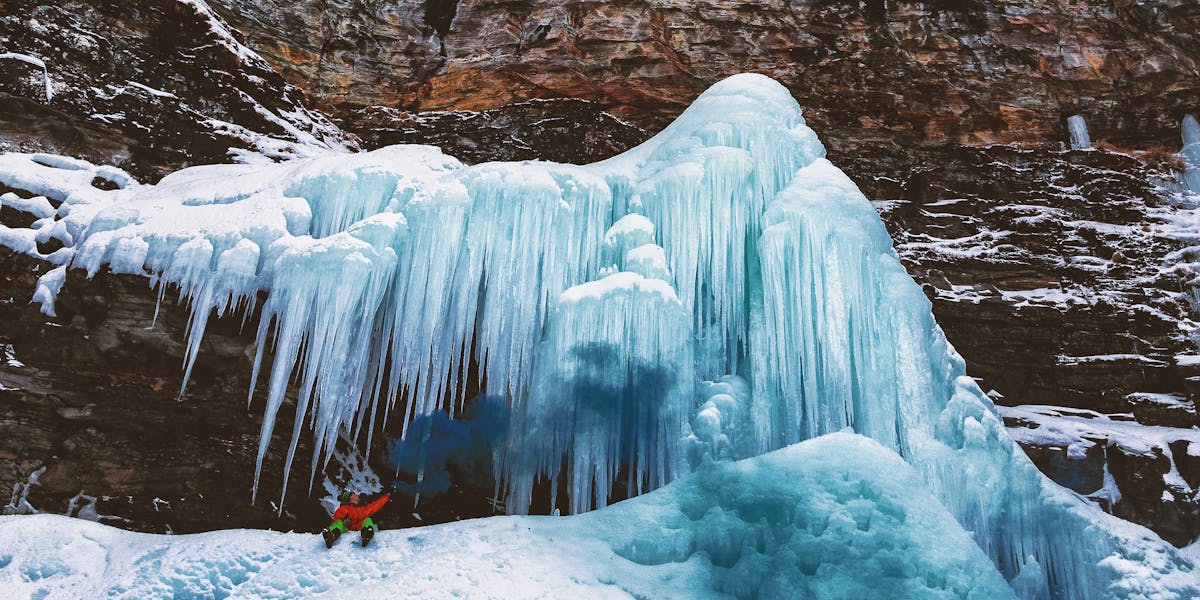
Grades of ice climbing difficulty: WI1 (low angle) through WI7 (extreme overhanging). Beginners typically top-rope WI2–WI3 first.
Crampons for Ice Climbing
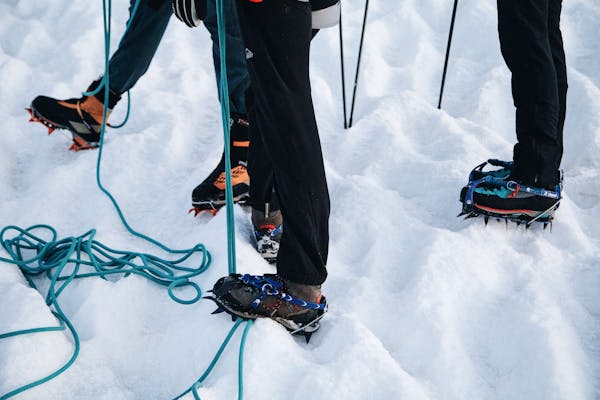
Ice climbing requires rigid crampons with mono or dual front points. General mountaineering crampons won't work — you need forward-projecting front points that allow you to stand on near-vertical ice.
- Step-in (bail) crampons: Require a full welt (raised toe/heel lip). Most secure for hard ice. Fastest to put on.
- Semi-automatic: Wire bail at front, strap at heel. Works with a partial welt. Good middle ground.
- Mono-point: Single front point for precision placements on thin ice and mixed climbing (rock + ice)
- Dual-point: Two front points for stability on WI grades. More beginner friendly.
See our dedicated Crampons Buying Guide for full compatibility details.
Ice Climbing Boots
You need boots specifically designed for ice climbing. Requirements:
- Welt (rand): Raised edge at toe and heel for step-in or semi-auto crampon attachment
- Stiffness: B2 or B3 rating. B1 boots (flexible) won't work with technical crampons.
- Insulation: 200–400g Thinsulate for mixed/ice climbing. You're standing still a lot.
- Temperature rating: Ice climbing happens in cold conditions. Boots rated to at least -20°F.
Ice Screws
Ice screws are the primary protection (anchors) for ice climbing. They're hollow stainless steel tubes that thread into ice to create bombproof anchors — when placed correctly in quality ice.
Key specs:
- Length: 13–22cm. Beginners: carry a mix of 13cm (thin ice/belays) and 17–19cm (main protection)
- Hanger type: Crank hangers rotate screws in quickly. Standard hangers require more hand force.
- Material: Stainless steel (most) or titanium (lighter, more expensive)
A beginner leading ice should carry 4–6 screws minimum. Top-roping requires 2–3 for the anchor only.
Harness, Helmet & Ropes
Harness: A standard rock climbing harness works for ice. Ice-specific harnesses add insulation padding (warmer when hanging), larger gear loops (for bulky screws), and compatibility with insulated pants (leg loops that fit over puffy layers).
Helmet: Mandatory for ice climbing. Falling ice from above and your own tools bouncing off the ice create constant head hazards. Use a certified climbing helmet (UIAA or CE EN 12492) — not a ski helmet.
Rope: A dry-treated 60m single rope (8.5–10mm diameter). Dry treatment is essential — ice climbing ropes get wet, and wet untreated ropes freeze and lose strength. Half ropes are used on multi-pitch ice but singles are fine for single-pitch and cragging.
Complete Starter Kit Checklist
| Item | Qty | Cost Range |
|---|---|---|
| Technical ice axes | 2 | $250–$450/pair |
| Rigid ice climbing crampons | 1 pair | $200–$350 |
| Ice climbing boots (B2/B3) | 1 pair | $350–$600 |
| Ice screws (13–19cm) | 4–6 | $35–$65 each |
| Dry-treated rope (60m single) | 1 | $200–$350 |
| Harness (ice-rated) | 1 | $80–$180 |
| Helmet (UIAA certified) | 1 | $70–$150 |
| Belay device + locking carabiner | 1 set | $30–$60 |
| Locking carabiners | 6–8 | $15–$25 each |
Recommended Ice Climbing Gear
Sources & Further Reading
Reviewed June 18, 2026. Source notes emphasize snow-sport safety guidance, winter-travel planning, helmet and binding standards, avalanche education, and discipline-specific governing resources.
See also: Ice Axe Buying Guide: Mountaineering vs Technical | Crampons Buying Guide | Snowshoe Buying Guide