Snow Sports · Gear Analysis · Report #TSP-SS-015

Ice Climbing vs Rock Climbing Gear: What Transfers, What You Need to Buy New

Already a rock climber? You're closer than you think — but there are critical ice-specific purchases that cannot be skipped.

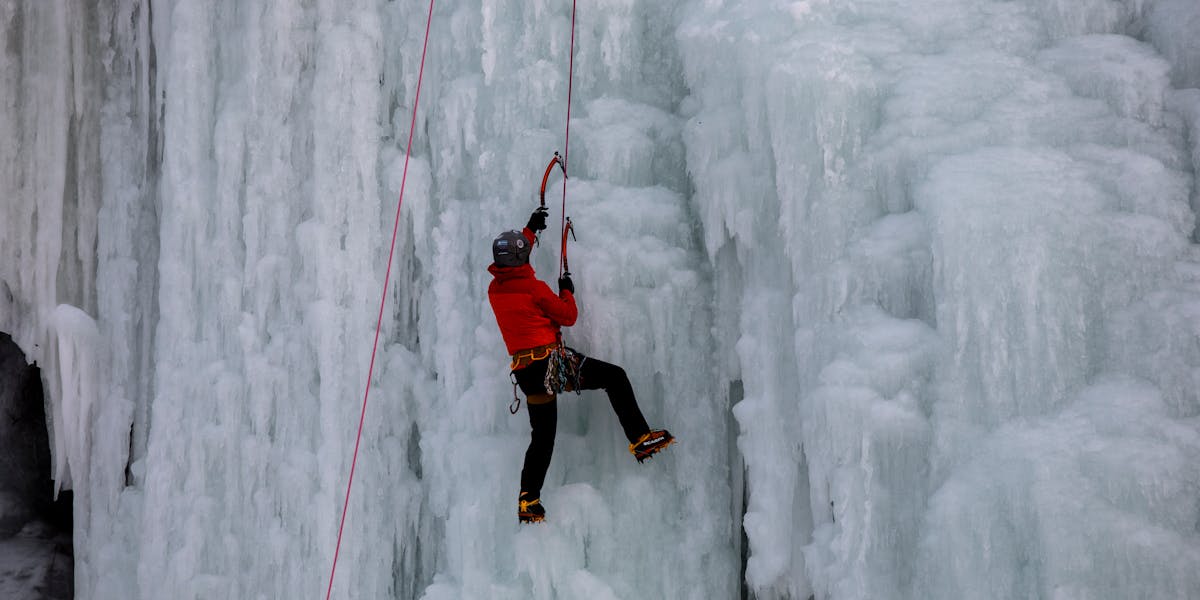
A climber in red jacket ascends a massive frozen waterfall, showcasing their ice
⚠️ Affiliate Disclosure: The Smarter Play earns a commission from qualifying Amazon purchases at no extra cost to you.

The Discipline Gap: Why Ice Climbing Is a Separate Gear System

Rock climbing and ice climbing share the same vertical objective — but the medium is fundamentally different. Rock is static; ice is dynamic, temperature-sensitive, and hostile to anything not purpose-built for it. A rope that performs flawlessly on granite becomes dangerously stiff at -15°C without dry treatment. Shoes that edge perfectly on basalt are useless on a frozen pillar.

The good news: your existing rack, harness, belay devices, and helmets transfer almost entirely. The key investments are the core movement tools — ice tools, crampons, and boots — which are non-negotiable new purchases. This guide breaks down exactly what works from your existing kit, and what represents essential new investment.

Gear That Transfers Directly

✅ Harness

Your standard rock climbing sit harness works for ice climbing. The key check: it must fit over insulated pants. Try it on with your base layers before heading out. Drop-seat designs (Petzl Corax, Black Diamond Couloir) make multi-pitch comfort dramatically better.

✅ Belay & Rappel Devices

Your ATC, Grigri, or Reverso transfers completely. Note that gloves make handling more awkward — practice with your intended winter gloves before committing to a route.

✅ Locking Carabiners & Quickdraws

Standard carabiners and quickdraws work on ice. The caveat: ice screws use 22mm gates — verify your lockers can clip them. Most modern lockers work fine.

✅ Helmet

Your rock climbing helmet transfers. Alpine helmets (Petzl Sirocco) offer better top coverage for ice fall hazard, but a rock helmet with solid top coverage is acceptable.

✅ Small Rack (Nuts, Hexes, Cams)

On mixed routes (M-routes combining rock and ice), your rock protection supplements ice screws. Worth bringing on any mixed objective.

Gear You Absolutely Must Buy New

🧊 Technical Ice Tools

The biggest purchase and the most critical. Technical ice tools have aggressive reverse-curved picks engineered to hook and hold in vertical ice. Standard trekking axes will not hold on vertical ice — period. For most entry ice climbers, mid-grade technical tools handle WI3–WI5.

🧊 12-Point Technical Crampons

Ice climbing crampons must have mono- or dual-point front points for standing on near-vertical ice. Hiking crampons with horizontal front points are not safe on vertical terrain. Always verify crampon-boot compatibility (C1/C2/C3 ratings) before purchasing either.

🧊 Ice Climbing Boots (B2 or B3)

Approach shoes, rock shoes, and hiking boots all fail: too flexible, insufficiently insulated, incompatible with technical crampon bails. A B2-rated boot handles most ice climbing. B3 is for extreme alpine. Buy boots and crampons together to ensure compatibility.

🧊 Ice Screws

Your rock protection does nothing in ice. A starter ice screw rack: 8–12 screws in 13cm and 17cm lengths. Modern screws feature integrated speed handles for one-handed placing while on the tools.

🧊 Dry-Treated Rope

Standard rock ropes absorb up to 50% of their weight in water and freeze stiff. This is a genuine safety hazard. Any ice climbing rope must carry a UIAA dry certification. Single 60–70m ropes are standard; half ropes for longer pitches.

🧊 Insulated Climbing Gloves

Rock climbing uses bare or thin gloves. Ice climbing requires waterproof, insulated gloves with enough dexterity for crampon adjustment and screw placing. Wet gloves at -10°C cause frostbite rapidly — waterproofing is not optional.

Top Gear Picks

Petzl Nomic Technical Ice Tools (Pair) — Industry benchmark tools. Progressive pick geometry for aggressive ice and mixed. Ergonomic grip reduces forearm pump. The tool most WI4+ climbers rely on.
~$550–$650/pair Check TSP deal hub →
Program: Amazon Associates
Grivel G12 New-Matic Crampons — Dual-point front points, step-in binding compatible with B2/B3 boots. Trusted by alpine guides worldwide. Modular point replacement extends lifespan.
~$130–$160 Check TSP deal hub →
Program: Amazon Associates
La Sportiva Nepal Cube GTX — B2 rated, Gore-Tex waterproofing, Boa closure for on-the-fly fit. Handles WI2–WI5 and most alpine objectives. Compatible with most technical crampons.
~$450–$550 Check TSP deal hub →
Program: Amazon Associates
Black Diamond Ice Screws (13cm & 17cm) — Standard-setting screws used by guides worldwide. Speed Handle for rapid one-handed placement. Build a mixed rack of both lengths.
~$35–$45/screw Check TSP deal hub →
Program: Amazon Associates
Mammut Crag Dry Rope 9.8mm — UIAA Dry certified single rope in 60m or 70m. Excellent dry treatment durability, smooth handling, high-visibility sheath. Great value entry into dry ropes.
~$220–$280 Check TSP deal hub →
Program: Amazon Associates
Black Diamond Guide Gloves — The gold standard for ice climbing. Gore-Tex insert, removable liner, durable leather palm. Used by professional guides on WI4 through Himalayan mixed routes.
~$85–$110 Check TSP deal hub →
Program: Amazon Associates

Gear Transfer Summary Chart

ICE vs ROCK CLIMBING — GEAR TRANSFER GUIDE GEAR ITEM TRANSFERS? NOTES Harness✅ YESMust fit over insulated pants; drop-seat preferred Belay/Rappel Device✅ YESPractice with gloves on before first route Helmet⚠️ MOSTLYWorks; alpine helmets add top coverage for ice fall Carabiners / Quickdraws✅ YESVerify lockers open with 22mm ice screw eyes Rope❌ NOMUST be dry-treated — non-dry ropes freeze and fail Ice Tools❌ NONo crossover — must buy technical ice tools Crampons❌ NOTechnical 12-point required; hiking crampons unsafe on vertical ice Boots❌ NOB2/B3 stiff insulated boots required

Sources & Further Reading

Reviewed May 29, 2026. Source notes emphasize snow-sport safety guidance, winter-travel planning, helmet and binding standards, avalanche education, and discipline-specific governing resources.
Related: See our Avalanche Safety Kit guide and Backcountry Skiing Gear Essentials for related alpine terrain guides.

Frequently Asked Questions

Can I use my rock climbing harness for ice climbing?

Yes — most sit harnesses transfer directly. Verify it fits over insulated pants and that gear loops accommodate ice screws. Drop-seat designs are more practical for layering.

Do I need special ropes for ice climbing?

Yes. Ice climbing requires a dry-treated rope. Standard rock climbing ropes absorb water, freeze stiff in cold conditions, and lose their dynamic properties — a genuine safety hazard.

How much extra does ice climbing gear cost?

Expect $800–$1,500 for ice-specific gear (tools, crampons, ice screws, dry rope) on top of your existing rock climbing kit. Ice tools and a dry rope are the biggest line items.

Can I use approach shoes for ice climbing?

No. You need B2/B3 stiff, insulated boots compatible with technical crampons. Approach shoes lack insulation and proper sole stiffness for crampon security.

More from Snow Sports

All Snow Sports →
Avalanche Safety Kit: Beacon, Probe, and Shovel — What to Buy and How to Use Them
Snow Sports

Avalanche Safety Kit

Beacon, probe, and shovel — the non-negotiable backcountry trio.

10 min read
Backcountry Skiing Gear Essentials: What You Need Beyond Resort Equipment
Snow Sports

Backcountry Skiing Gear Essentials

Everything you need to leave the resort safely.

11 min read
Avalanche Airbag Buying Guide: How They Work, Canister vs Electric & Top Picks
Snow Sports

Avalanche Airbag Buying Guide

Canister vs electric, how they work, top picks.

10 min read

Equipment Intel, Weekly

New analysis, test results, and gear science — delivered to your inbox.