Soccer · Footwear Analysis · Report #TSP-SO-002

Soccer Cleat Buying Guide 2026: FG, AG, Turf, Indoor and Fit Checks

Choose soccer cleats by surface first, then fit, stud pattern, upper feel, durability, league rules, and whether the outsole is safe for your field.

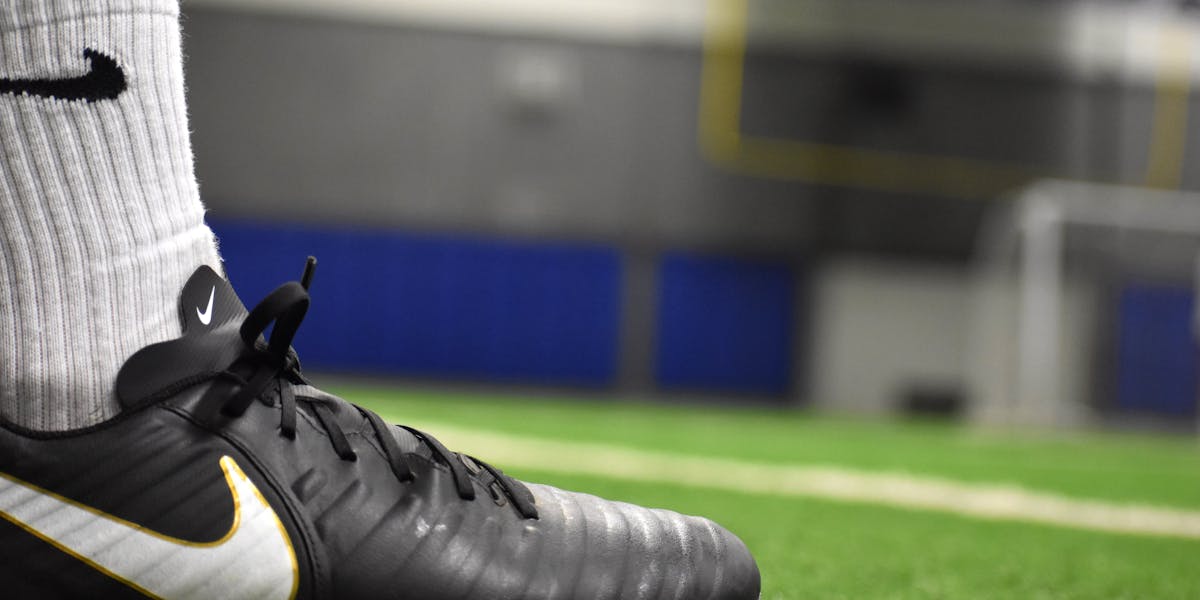
A detailed shot of a soccer cleat on an indoor turf field, emphasizing footwear an...
Quick answer

Fast answer for "soccer cleat buying guide"

Match the outsole to the surface before choosing a brand. FG, AG, turf, and indoor shoes are not interchangeable, and fit beats pro-player colorways.

ReaderFirst CheckWhy It FitsBuy Zone
Firm grassFG cleatBladed/conical firm-ground plates are built for natural grass that is not soaked.Surface first
Artificial grassAG or MG plateDedicated AG/MG studs reduce harsh traction and pressure on synthetic fields.Avoid FG-only
TurfTF outsoleShort rubber nubs work better on carpet-style turf and training facilities.Use turf shoe
Indoor/futsalIC flat gum rubberIndoor shoes prioritize court grip and touch without studs.No studs
Growing playerFit + returnsToe room, heel lock, and exchange windows matter more than elite-tier uppers.Try first
Surface mismatch riskWrong studs can feel unstable and may violate facility rules.
Fit over tierAcademy/pro tiers often make more sense than elite uppers for youth buyers.
Rules checkIFAB Law 4 requires equipment that is safe for the player and others.
Search fit

If you searched "best soccer cleats," filter by field type first

The page now routes readers through surface, fit, and official brand/source paths instead of generic marketplace searches.

FG/AGConfirm the outsole is intended for your main match surface.
TF/ICTurf and indoor shoes solve different traction problems.
FitLock heel, avoid toe crush, and check return terms for growing players.
Official source check

Soccer cleat surface and rules source path

Surface, fit, and equipment safety come before brand tier or pro colorway.

Decision matrix

Soccer cleat decision matrix

Use this before buying by colorway or pro endorsement.

Mostly grassFG or mixed-ground only if field conditions fit the plate.
Mostly artificialAG/MG plate with more distributed studs.
Indoor leagueIC futsal shoe with non-marking outsole.
Youth budgetMid-tier model, good returns, and room for growth.

Wrong Surface = Wrong Cleats = Injuries

Soccer cleats are engineered for specific playing surfaces. Wearing firm ground cleats on artificial turf increases your ACL injury risk by up to 2.5x, per a 2023 American Journal of Sports Medicine meta-analysis. The stud pattern interacts with the surface to provide traction — wrong studs on the wrong surface either grip too much (causing knee/ankle injuries) or too little (causing slips).

Firm Ground (FG) — Natural Grass

The most common type. Designed for natural grass fields that are dry to slightly moist. Molded studs (non-removable) in a mix of conical and bladed shapes.

  • Stud pattern: 10–14 molded studs, mix of conical (traction) and bladed (stability)
  • Best for: Most outdoor natural grass fields in dry conditions
  • Season: Spring through fall in most climates
Nike Mercurial Vapor 16 Elite FG — Speed boot. Lightweight Vaporposite upper, Zoom Air cushioning in forefoot, aggressive stud pattern. For fast, agile players.
~$275 Check Nike Mercurial source
Program: official/source path
adidas Predator Elite FG source path — Control boot. Textured Demonscale upper for spin and swerve. Firm ground soleplate with hybrid stud pattern.
~$250 Check adidas Predator source
Program: official/source path

Soft Ground (SG) — Wet/Muddy Grass

Metal studs (usually 6–8, removable/replaceable) designed to penetrate soft, wet, or muddy natural grass. Longer studs prevent sliding on saturated fields.

  • Stud pattern: 6–8 metal screw-in studs, longer than FG
  • Best for: Rainy conditions, waterlogged fields, winter play in wet climates
  • Important: Metal studs are banned on artificial turf and many youth leagues

Turf (TF) — Artificial Turf / Hard Ground

Short rubber studs (dozens of small nubs) designed for artificial turf surfaces. The small studs distribute pressure evenly across the harder surface, reducing joint stress.

  • Stud pattern: 20–30+ small rubber nubs
  • Best for: Artificial turf, hard dirt fields, recreational play on any surface
  • The versatile choice: If you play on mixed surfaces and can only buy one pair, turf shoes are the safest bet
Nike Mercurial Vapor 16 Academy TF — Budget version of the Vapor with turf-specific outsole. Synthetic upper, comfortable fit, excellent traction on artificial surfaces.
~$75 Check Nike Mercurial turf path
Program: official/source path

Indoor (IN/IC) — Gym Floors / Futsal

Flat, non-marking gum rubber soles for indoor courts and gym floors. No studs at all — the flat sole provides grip through rubber-on-court friction. Required for futsal and indoor leagues.

Nike Lunar Gato II IC — The reliable indoor/futsal benchmark. NikeSkin upper for close ball touch, gum rubber outsole, Lunarlon cushioning. Used by professional futsal players worldwide.
~$90 Check source/deal path
Program: official/source path

Artificial Ground (AG) — The Emerging Category

AG-specific cleats use more studs than FG but longer than TF, designed specifically for modern 3G/4G artificial turf. This is a newer category that major brands are investing in as artificial fields become more common. If you primarily play on artificial turf, AG-specific cleats are worth considering.

Upper Materials: Touch vs Durability

MaterialTouch/FeelDurabilityPriceWater Resistance
Kangaroo leather★★★★★★★★☆☆$150–$300Low (absorbs water)
Calfskin leather★★★★☆★★★☆☆$120–$250Low
Knit (Flyknit, Primeknit)★★★★☆★★★★☆$100–$275Moderate
Synthetic (textured)★★★☆☆★★★★★$50–$200High

Budget Recommendations

adidas Copa source path — Premium leather touch at a budget price. Soft leather upper, FG soleplate, classic Copa styling. Best value leather boot available.
~$70–$80 Check adidas Copa source
Program: official/source path
PUMA Future 7 Play FG/AG — Budget versatility. Works on both natural grass and artificial turf. Knit upper, adaptive fit, multi-surface stud configuration.
~$60–$75 Track deal path
Program: official/source path

Common Mistakes

Mistake #1: Wearing FG cleats on artificial turf. The longer studs don't release properly from artificial fibers, putting extreme stress on knees and ankles. Use TF or AG cleats on artificial surfaces.
Mistake #2: Buying kids' cleats too big. A half-size up is fine for growing feet. A full size up causes blisters, poor ball control, and tripping. Fit for now.
Mistake #3: Wearing studs indoors. You'll damage the floor, get zero traction (studs on hard floor = sliding), and be asked to leave. Indoor courts require flat, non-marking soles.
SURFACE → CLEAT TYPE MATCHING Firm Ground (FG) Dry natural grass 10-14 molded studs Most common type Soft Ground (SG) Wet/muddy grass 6-8 metal screw-in ⚠️ No artificial turf Turf (TF) Artificial turf 20-30+ rubber nubs Most versatile choice Indoor (IN) Gym/court floors Flat gum rubber Non-marking required Artificial (AG) Modern 3G/4G turf More studs than FG Emerging category ⚠️ FG cleats on artificial turf = 2.5x ACL injury risk. Always match cleats to surface.
adidas F50 Elite FG — Top-tier speed boot — lightweight, responsive, tournament-ready
~$234 Shop at Soccer Garage →
Soccer Garage via CJ Affiliate
adidas Predator League FT FG — Mid-range control cleat with grip texture for precise passing
~$90 Shop at Soccer Garage →
Soccer Garage via CJ Affiliate

Frequently Asked Questions

What type of soccer cleats do I need?

Firm ground (FG): natural grass, most common. Soft ground (SG): wet/muddy natural grass, metal studs. Artificial ground (AG): synthetic turf, shorter rubber studs. Turf (TF): short rubber outsole for hard artificial surfaces. Indoor (IN/IC): flat gum rubber sole for indoor courts.

Should soccer cleats be tight?

Yes — snug but not painful. Soccer cleats should fit like a glove with minimal space (5-8mm) between your longest toe and the end. No heel slippage. Leather cleats stretch slightly; synthetic cleats barely break in. Size down if between sizes.

How long do soccer cleats last?

For regular players (3-4x/week): 4-8 months. For weekend players: 1-2 seasons. Signs of replacement: worn studs (less than 3mm), sole separation, torn upper material, or loss of traction. Rotating two pairs extends the life of both.

More from Soccer

All Soccer →
Soccer Ball Types Decoded: Match Balls vs Training Balls vs Futsal — What You Actually Need
Soccer

Soccer Ball Types Decoded: Match, Training, Futsal, and Turf

FIFA quality marks and material differences.

9 min read

Equipment Intel, Weekly

New analysis, test results, and gear science — delivered to your inbox.

Sources & Further Reading

Reviewed June 5, 2026. Source notes emphasize player footwear legality, field surfaces, football turf, futsal surfaces, and surface-specific traction.